This post contains affiliate links. As an Amazon Associate we earn from qualifying purchases, at no extra cost to you. Read our disclosure.
Safety first: Prices are examples with an as-of date. Always confirm with your own vendors. Please read our editorial guidelines before you start.
Key takeaways
- Most vows run 1 to 2 minutes, about 150 to 250 words.
- People speak about 130 to 150 words per minute, slower when nervous.
- Use five parts: opening, what you love, the moment you knew, promises, closing.
- Agree on a word range with your partner and swap only word counts, not drafts.
- Read them aloud at least five times with a timer, and print them for the day.
In this post9 sections
How Long Should Wedding Vows Be?
Most wedding vows land between 1 and 2 minutes, which is roughly 150 to 250 words. Wedding guides commonly suggest staying under about 3 minutes, because guests are standing or sitting still and you are nervous.
Time depends on how fast you talk. The average speaking rate for American English is about 150 words per minute (National Center for Voice and Speech), and nervous speakers at a ceremony often slow toward 130, so the table shows both.
| Words | At 150 words per minute | At 130 words per minute |
|---|---|---|
| 75 | 0:30 | 0:35 |
| 100 | 0:40 | 0:46 |
| 150 | 1:00 | 1:09 |
| 200 | 1:20 | 1:32 |
| 250 | 1:40 | 1:55 |
| 300 | 2:00 | 2:18 |
| 400 | 2:40 | 3:05 |
Pauses, laughter and happy tears add time on top, so a 200-word draft often runs close to 2 minutes on the day. Time yourself reading slowly, not at kitchen-table speed.
The Wedding Vow Template: A 5-Part Formula
This wedding vow template splits your vows into five parts with a word budget for each. Fill every part and you land at about 145 to 185 words, roughly 1 to 1.5 minutes aloud.
| Part | What it does | Word budget |
|---|---|---|
| 1. Opening | Say their name and one true thing about them | 15 to 20 |
| 2. What you love | One specific habit or quality, with a small detail | 35 to 45 |
| 3. The moment | When you knew, told in one or two sentences | 30 to 40 |
| 4. Promises | Three serious promises and one light one | 50 to 60 |
| 5. Closing | A forever line you can say while looking up | 15 to 20 |

Fill-In Wedding Vow Template, Part by Part
Copy these lines, then replace each bracket with your own words. Cross out anything that doesn't sound like you; the structure matters more than the exact phrases.
-
Step 1: Opening (15 to 20 words)
"[Name], from the day we [how you met], I have known [one true thing about them]."
Keep it simple. Starting with their name gives you a breath and gets their attention.
-
Step 2: What you love (35 to 45 words)
"I love the way you [specific habit]. You make [an ordinary thing] feel like [how it feels]."
Pick one detail only they would recognize, like how they load the dishwasher or the voice they use for the dog. Specific beats poetic.
-
Step 3: The moment you knew (30 to 40 words)
"I knew I wanted to marry you when [one specific moment]."
One moment, one or two sentences. Skip inside jokes that need explaining, and check that it is a story your partner is happy to have told in public.
-
Step 4: Promises (50 to 60 words)
"Today I promise to [serious promise], to [serious promise] and to [serious promise]. I also promise to [light promise]."
The light promise gives the room a laugh and gives you a breath. Keep the serious ones about actions, like listening or being honest, rather than feelings.
-
Step 5: Closing (15 to 20 words)
"[Wherever life takes us / Today and every day after], I choose you."
Memorize this last line if you can. Looking up from the card for the final sentence is the moment guests remember.
Written Examples at Three Lengths
These examples were written by our editors to show the formula at different lengths. They are not real couples' vows, so borrow the structure and replace the details with your own.
Word counts include the bracket placeholders as written, so your final count will shift a little. Read times use the 130 to 150 words per minute range above.
Match Your Vow Length With Your Partner
One partner reading 60 words and the other reading 400 is the most common vow mismatch, and it can feel awkward for both. You don't need to share drafts to avoid it.
Agree on a word range, such as 150 to 200 words, and a few ground rules: how funny, how private, whether to include traditional lines. Then swap only your word counts the week before, or ask your officiant to read both and check they feel balanced.
Adding Traditional Vow Lines
Many couples write personal vows, then end with traditional lines they repeat after the officiant. This classic wording, adapted from the Book of Common Prayer, is about 30 words, or roughly 12 to 15 seconds.
To have and to hold from this day forward, for better, for worse, for richer, for poorer, in sickness and in health, to love and to cherish.
If your ceremony is religious, ask your officiant whether personal vows are allowed and how long they can be. Some traditions use only set vows, and personal words can move to the reception or a private letter.
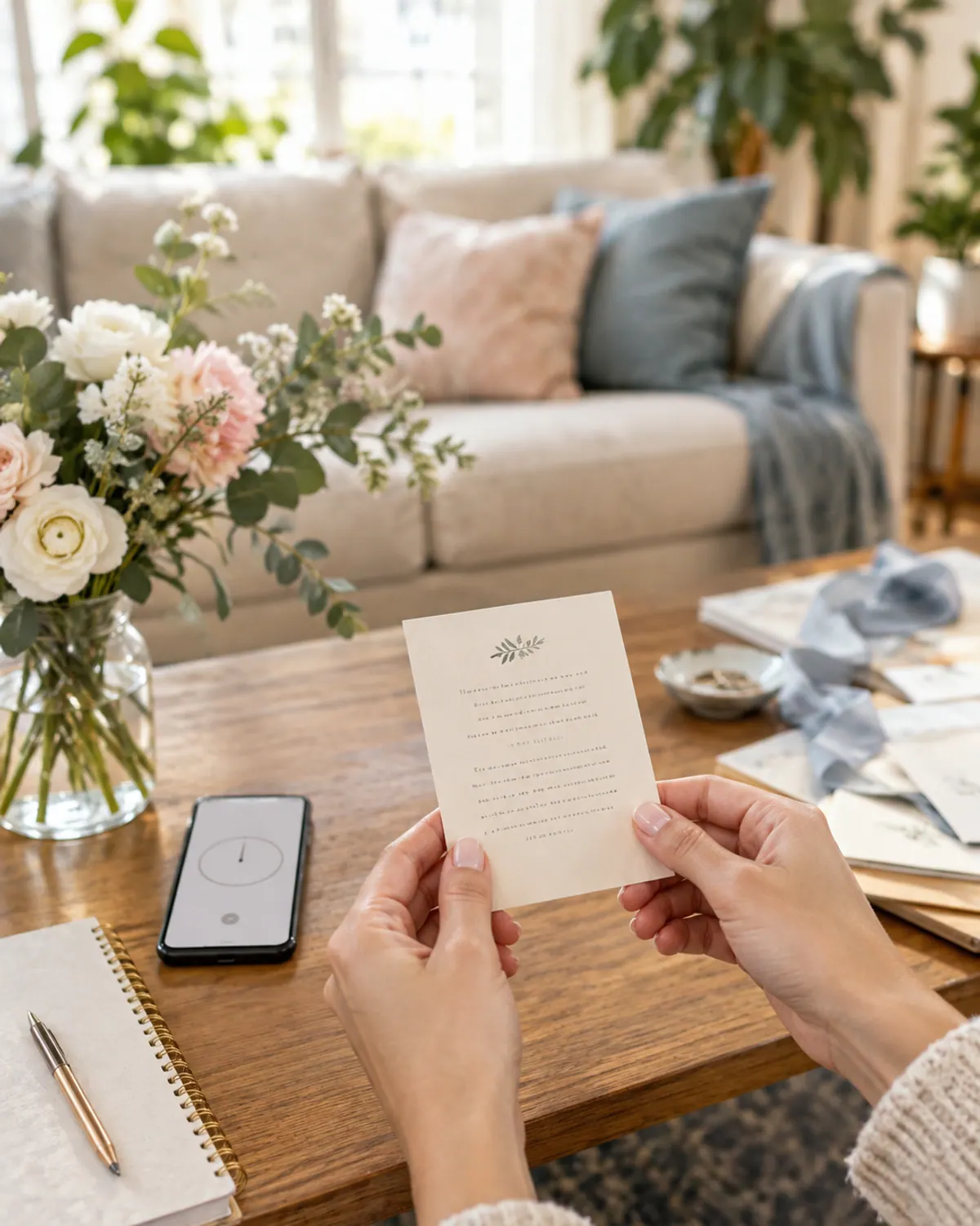
Practice Reading Your Vows Out Loud
Before the wedding
Helpful, not required
-
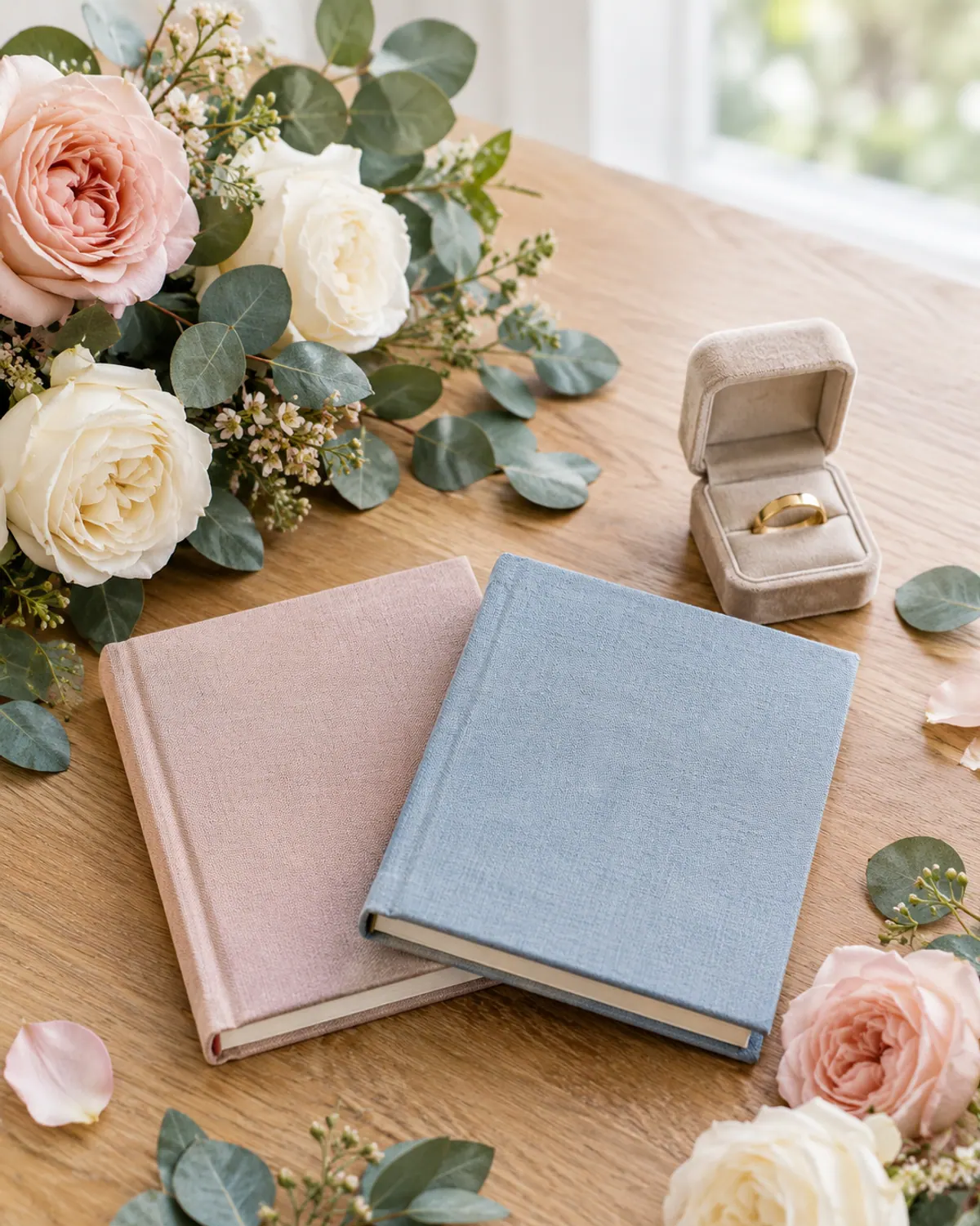
Wedding vow books (set of two)
about $10 to $25
Look better in photos than a phone and become a keepsake.
Check price on Amazon for Wedding vow books (set of two) -
Fine-tip archival pen
about $8 to $15
Writes cleanly in vow books without bleeding through.
Check price on Amazon for Fine-tip archival pen
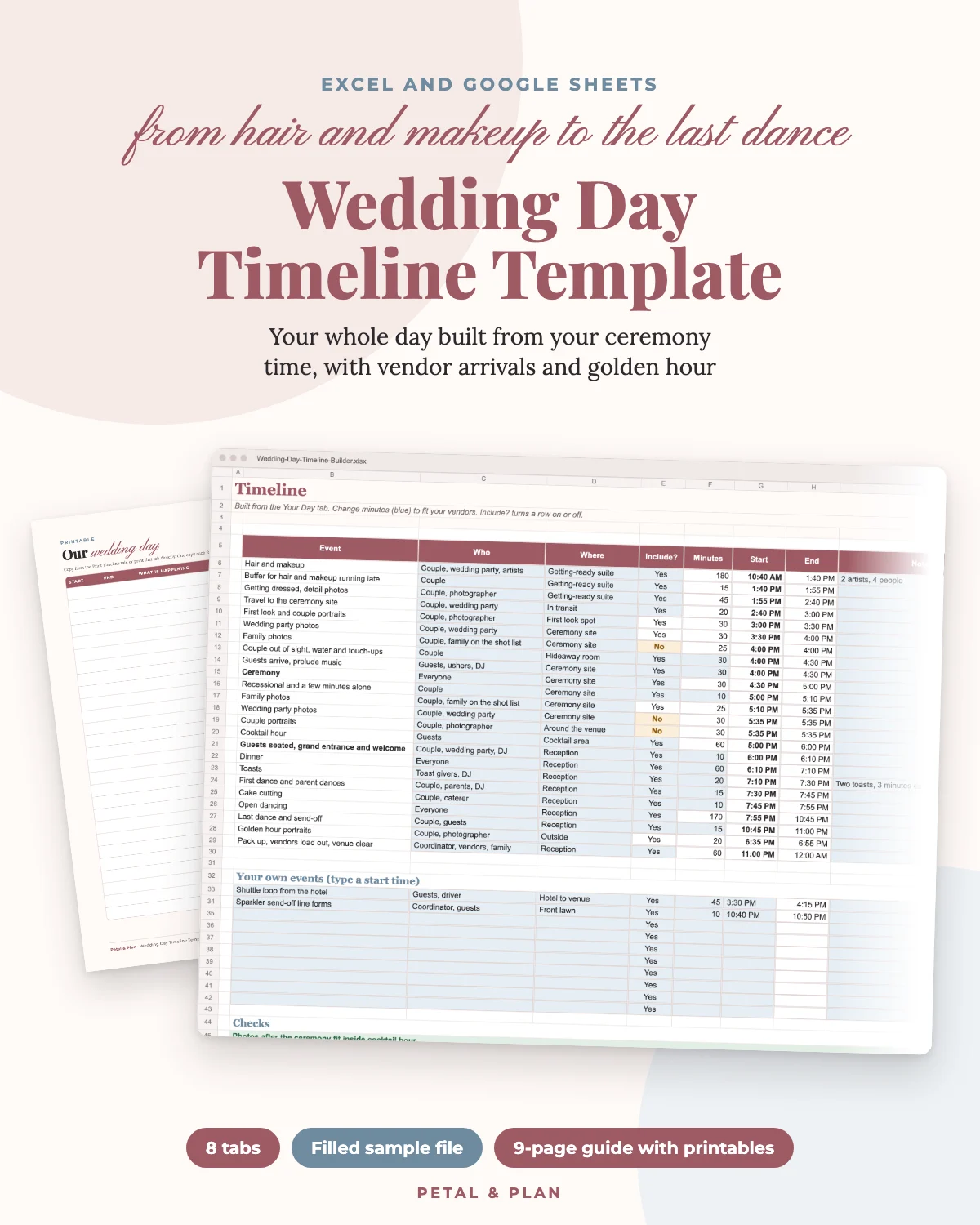
Planning when vows happen in the ceremony? The ceremony block in our wedding day timeline allows about 30 minutes, which comfortably fits two sets of 2-minute vows.
More Wording Help
If your invitations are still in draft, see our wedding invitation wording for every family situation. And once RSVPs are in, our guide to how to make a wedding seating chart helps with the next big job.
For when vows fit into the bigger picture, the wedding day timeline for 2pm, 4pm and 6pm ceremonies shows how long the ceremony block runs, and the 12 month wedding planning checklist shows when to start writing.
Frequently asked questions
How long should wedding vows be?
Most vows run 1 to 2 minutes, which is about 150 to 250 words at a normal speaking pace. Staying under about 3 minutes keeps the ceremony moving.
How many words is a 2-minute vow?
About 260 to 300 words, since most people speak 130 to 150 words per minute. Nervous speakers are often slower, so a 250-word draft is a safe target for 2 minutes.
What do you say in wedding vows?
A simple order works: open with their name and one true thing, say what you love with a specific detail, share the moment you knew, make three serious promises and one light one, then close with a forever line.
Do both partners' vows have to be the same length?
Not exactly, but they should feel balanced. Agree on a word range, such as 150 to 200 words, and compare word counts the week before.
Can I read my vows from my phone?
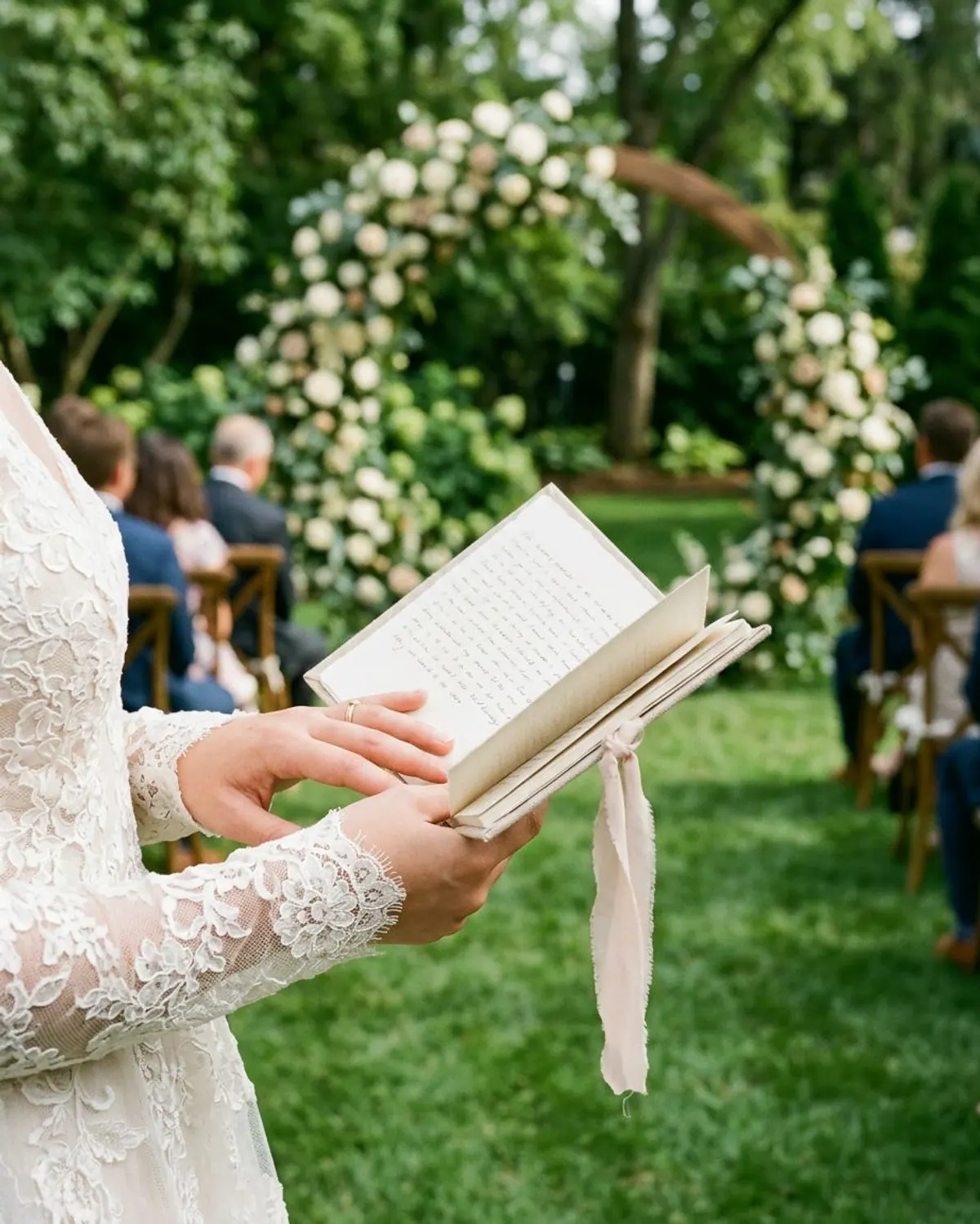
You can, but a printed card or vow book looks better in photos and won't light up with notifications. Give your officiant a backup copy either way.
Save it for later
Pin this to your Invitations, Vows & Speeches board so it's there when you need it.
Save to Pinterest