This post contains affiliate links. As an Amazon Associate we earn from qualifying purchases, at no extra cost to you. Read our disclosure.
Safety first: Prices are examples with an as-of date. Always confirm with your own vendors. Please read our editorial guidelines before you start.
Key takeaways
- Hosts speak first. In most US receptions that is a parent or the couple, then the maid of honor and best man, with the couple closing.
- Keep each speech to 3 to 5 minutes. At 130 to 150 words a minute, 3 minutes is about 390 to 450 words.
- Plan 3 to 5 speakers for a 15 to 30 minute block, and never more than 40 minutes (Bridebook Canada, updated July 2026).
- Put the speeches once guests have food, as our 4 pm sample timeline does at 6:30 pm.
- Ask divorced or blended families their wishes first, then give equal time slots.
In this post12 sections
- Wedding Speech Order: The Short Answer
- Quick Facts
- Three Common Speech Orders and When to Use Each
- Before Dinner, During Dinner or After: Where Speeches Go
- How Long Should Each Wedding Speech Be?
- How Long Is the Whole Speech Block?
- A Timed Speech Block for a 100-Guest Reception
- Divorced Parents, a Late Parent and Other Real Situations
- No DJ or Emcee? A Budget Way to Run Speeches
- A Speaker Brief You Can Copy
- Common Speech Order Myths
- FAQ
Wedding Speech Order: The Short Answer
In most US receptions, the hosts speak first, then the maid of honor and best man, then any parents who want a turn, and the couple closes with a thank-you. Nothing in etiquette forces that order, so reorder it to suit your family. WeddingWire's speech guide lists the best man, then the maid of honor, then the parents, with the couple optional, and says to keep each speech under five minutes, with about three as the best length.
The father-of-the-bride-first, groom-second order you may have read about is the UK running order, used on Bridebook's UK guide. US couples are free to skip it. Pick the order below that fits who is hosting, then put the time on the clock.
Quick Facts
| Question | Answer | Source |
|---|---|---|
| Who speaks first? | Whoever is hosting: a parent or the couple | Common US practice; UK order differs |
| How many speakers? | 3 to 5 fills 15 to 30 minutes | Petal & Plan arithmetic below |
| Length of each speech | 3 to 5 minutes; 5 to 7 at most | WeddingWire; Budget Savvy Bride (updated Sept 2024) |
| Whole speech block | 20 to 30 minutes, never past 40 | Bridebook Canada (updated July 2026) |
| Hand-off between speakers | About 30 seconds | Bridebook Canada |
| Words in a 3-minute speech | About 390 to 450 | 130 to 150 words a minute |
| Where it goes | During or right after dinner | Our 4 pm sample timeline puts toasts at 6:30 pm |
Three Common Speech Orders and When to Use Each
These are patterns, not rules. The host-first order is the most common choice because it starts the speeches with a welcome and puts the couple's thank-you last.
| Order | Who speaks, in sequence | Best when |
|---|---|---|
| Host first | 1. Host welcome (a parent or the couple) 2. Maid of honor 3. Best man 4. Couple thank-you | One or both sets of parents host, or the couple pays and hosts |
| Parents lead | 1. Bride's parent 2. Groom's parent 3. Maid of honor 4. Best man 5. Couple thank-you | Both families want a turn and each has one speaker |
| Friends only | 1. Maid of honor 2. Best man 3. Couple | Small weddings and couples who host themselves |
Before Dinner, During Dinner or After: Where Speeches Go
Speeches are usually the one moment when every guest is seated at once, which is why they work best while people are at their tables. The three common slots each have a catch to plan for.
| Slot | Why couples pick it | Watch for |
|---|---|---|
| Once everyone has food | Guests are seated, speakers finish early and enjoy dinner | Ask the caterer to serve the head table first and pause service during each toast |
| Between dinner and cake | Plates are cleared and attention is high | Cake and dancing wait; a DJ or venue paid by the hour keeps the clock running |
| After cake, before dancing | Keeps the dance floor schedule clean | Guests drift to the bar, and speakers wait longest, so nerves build |
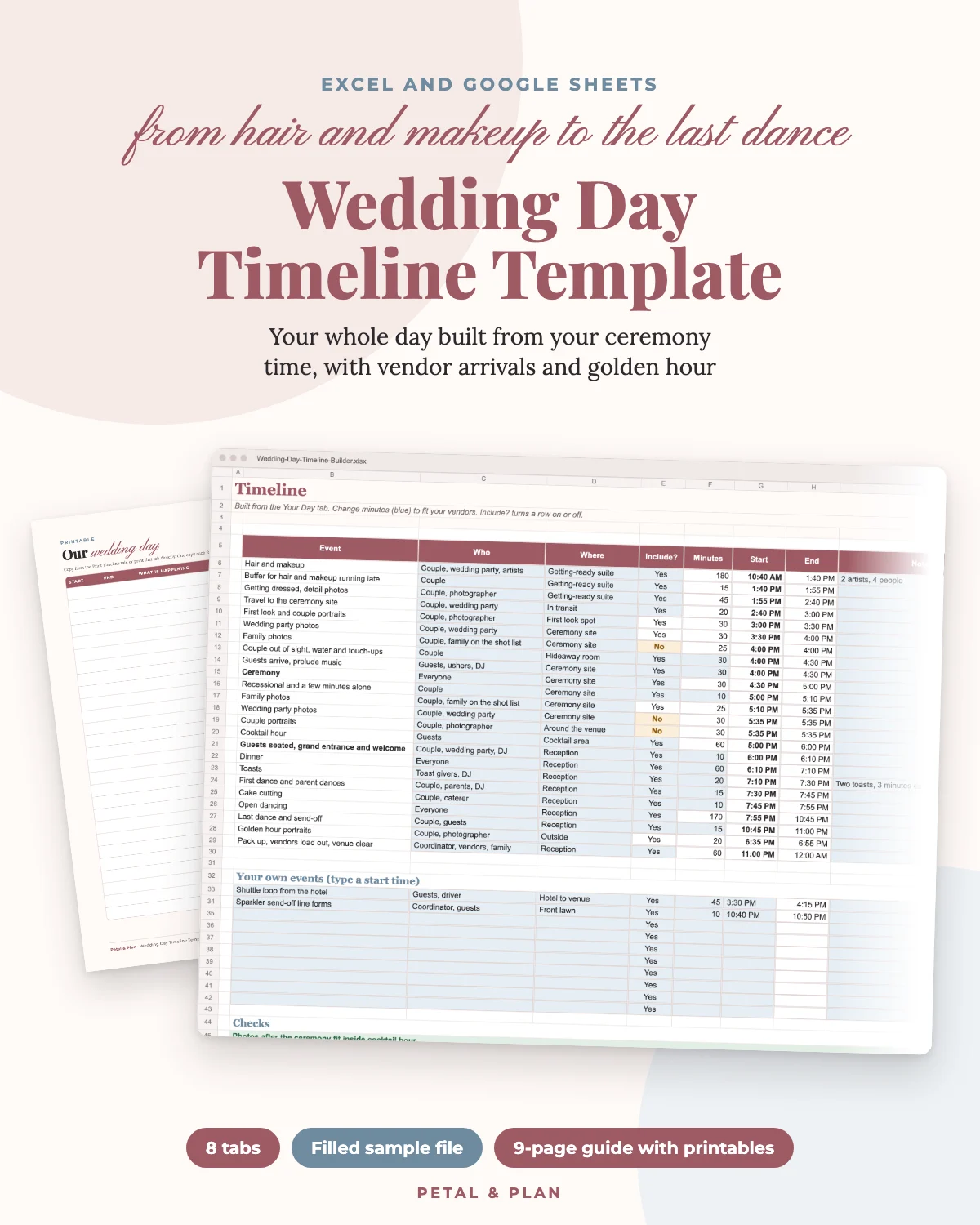
Our 4 pm sample wedding timeline uses the first slot: dinner service starts at 5:40 pm and 2 or 3 toasts follow at 6:30 pm, just before golden hour portraits. Use whatever slot your caterer can support.
How Long Should Each Wedding Speech Be?
Sources land in the same range. WeddingWire says to stay under five minutes, with about three as the best length. The Budget Savvy Bride (updated September 2024) calls five to seven minutes typical and says five is plenty. Bridebook's Canada guide gives the father of the bride 7 to 9 minutes, the best man about 5 and the maid of honor 4 to 6, which runs longer than most US receptions want.
We plan on 3 minutes for friends and 3 to 4 for parents, because short speeches keep the block small. Time depends on how fast the speaker talks. The average for American English is about 150 words per minute (National Center for Voice and Speech). We use 130 as a slower planning figure for nervous speakers, which is our estimate, so the table shows both.
| Speech length | At 130 words a minute | At 150 words a minute |
|---|---|---|
| 2 minutes | 260 words | 300 words |
| 3 minutes | 390 words | 450 words |
| 4 minutes | 520 words | 600 words |
| 5 minutes | 650 words | 750 words |
Practice with a stopwatch before the day. Our vow word count guide has the same math for vows.

How Long Is the Whole Speech Block?
Use this formula: speakers times (minutes per speech plus half a minute for the hand-off). Bridebook's Canada guide says the block typically runs 20 to 30 minutes and should not pass 40, so the table flags anything near that line.
| Speakers | Minutes each | Block length | Verdict |
|---|---|---|---|
| 3 | 3 | About 11 minutes | Very tight, great for small weddings |
| 4 | 3 | 14 minutes | The example below |
| 5 | 3 | About 18 minutes | Comfortable |
| 5 | 4 | About 23 minutes | Comfortable |
| 6 | 4 | 27 minutes | Top of the usual range |
| 6 | 5 | 33 minutes | Long; trim or move some to the rehearsal dinner |
| 8 | 5 | 44 minutes | Past the 40 minute limit |
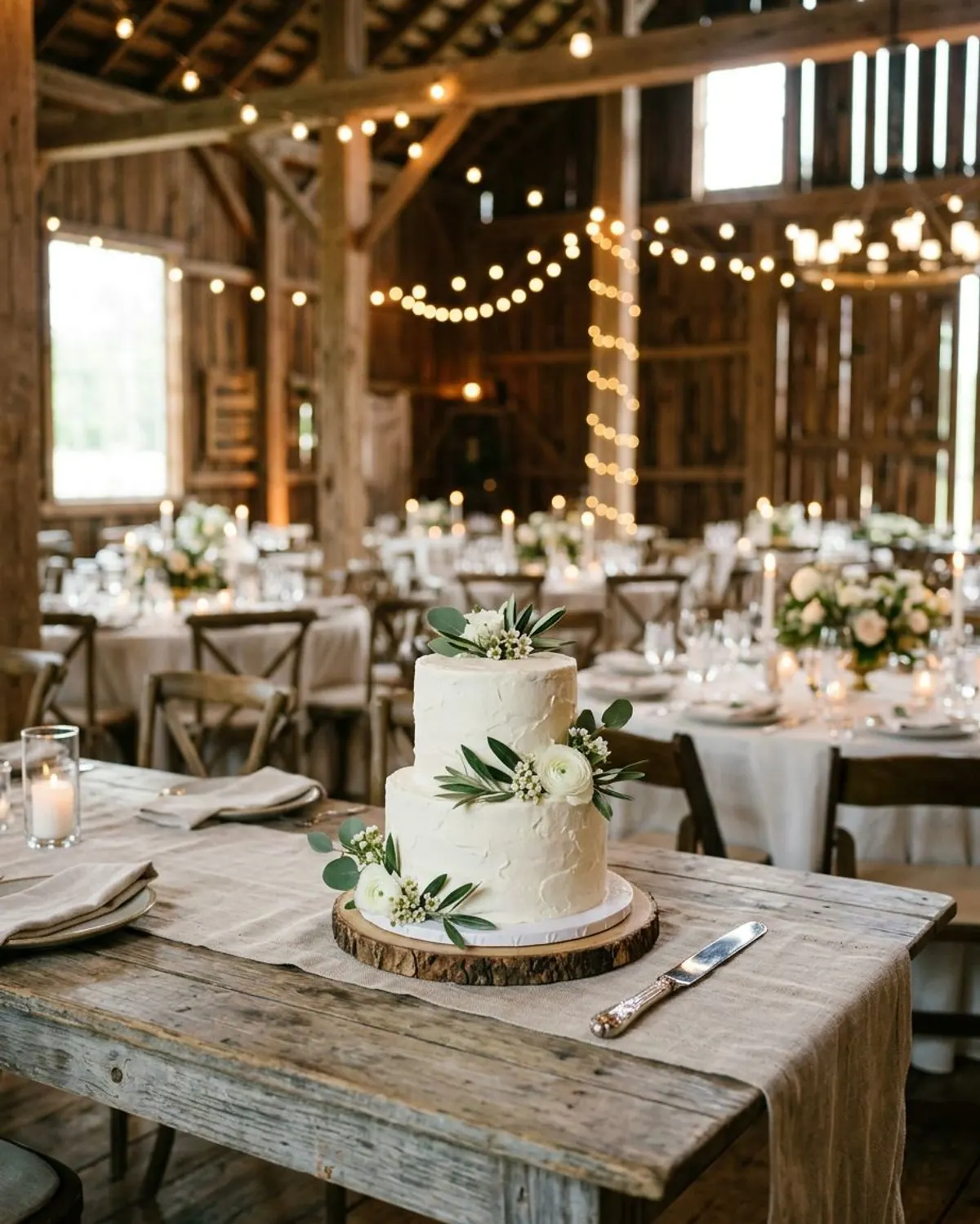
A Timed Speech Block for a 100-Guest Reception
This example builds on the dinner timing in our 4 pm sample day. It has four speakers at 3 minutes each, so the block is 14 minutes. Start times are rounded to the nearest minute.
| Time | What happens |
|---|---|
| 5:40 pm | Grand entrance; the host gives a 1 minute welcome; dinner service starts, head table first |
| 6:25 pm | Everyone has food; emcee confirms the mic works |
| 6:30 pm | Parent toast (3 minutes) |
| 6:34 pm | Maid of honor (3 minutes) |
| 6:37 pm | Best man (3 minutes) |
| 6:41 pm | Couple thank-you (3 minutes), then a raised glass |
| 6:45 pm | Golden hour portraits; guests finish dinner |
Divorced Parents, a Late Parent and Other Real Situations
Real families rarely fit the template, and the order is where it shows. These are options to talk through with the people involved, not rules.
| Situation | Option to consider |
|---|---|
| Divorced parents | Give each parent the same time slot, or have the couple give one joint welcome and skip parent speeches. Equal lengths avoid the question of who matters more. |
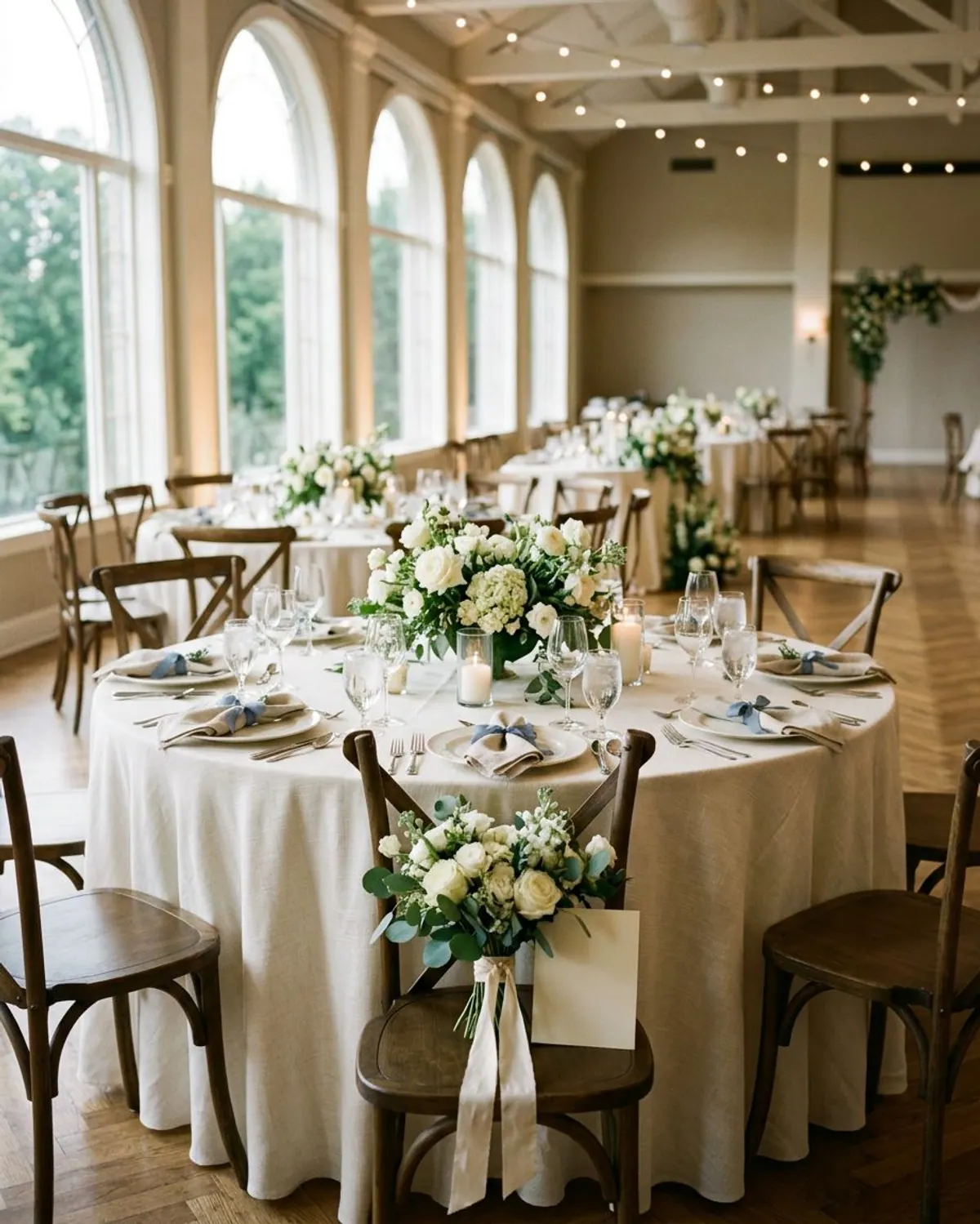
| A parent who has passed away | The couple or a sibling mentions them in a toast, with a raised glass. A reserved chair with flowers is a quiet touch. Ask close family first. |
| Stepparents | Ask whether they would like to speak. Offering is kind; assuming is not. |
| Two mothers, two fathers or a same-sex couple | Best man and maid of honor are only labels. Use 'best person', or name the role. Order by who is hosting. |
| No best man or maid of honor | Choose one friend or sibling from each side. Two speakers can carry a short block. |
| Couple pays and hosts | The couple opens with the welcome, then friends and any parents. |
| A big wedding party | Pick 2 to 4 speakers. Others join a joint toast or share stories at the rehearsal dinner. |
Our invitation wording guide covers the same family situations on paper, including divorced parents and blended families. Settle who is hosting there, and the speech order follows.
No DJ or Emcee? A Budget Way to Run Speeches
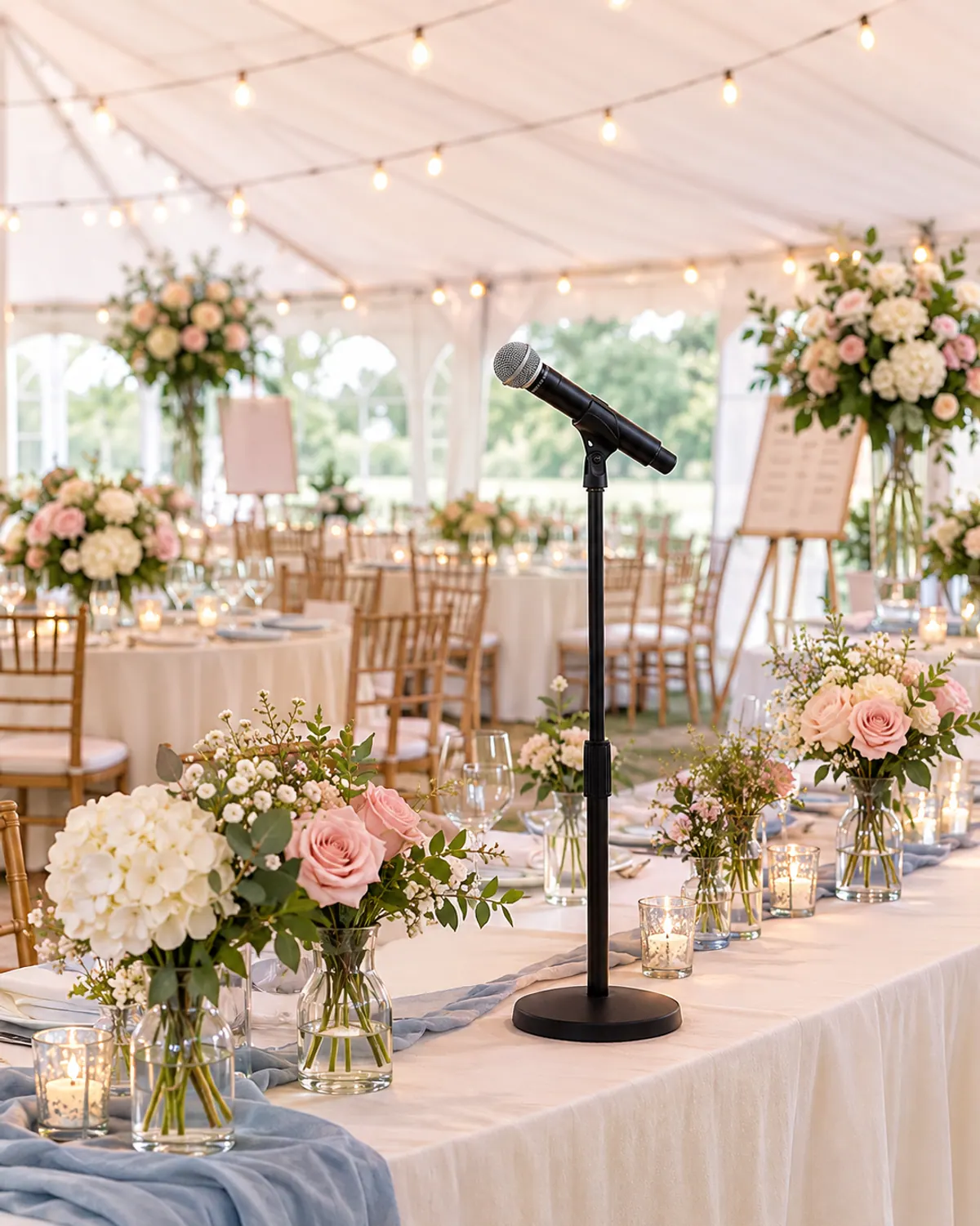
You do not need to hire anyone to introduce speakers. Ask a calm friend or cousin to be the emcee, give them the clock times, and let them introduce each speaker in one sentence. The venue or caterer may lend a wireless microphone, and it is worth asking before you buy one.
Print the order on a card at the head table so the emcee and speakers see it. Seat the speakers near the mic, in your seating chart, so no one walks across a dark room. Tell your photographer when toasts start, using the wedding photo list for your photographer.
Speech supplies, if you cannot borrow them
-
Wireless handheld microphone with receiver
Typically $25 to $80
For a backyard or hall with no sound system. Test it with a speaker's voice before guests arrive.
Check price on Amazon for Wireless handheld microphone with receiver -
Toasting champagne flutes
Typically $15 to $45
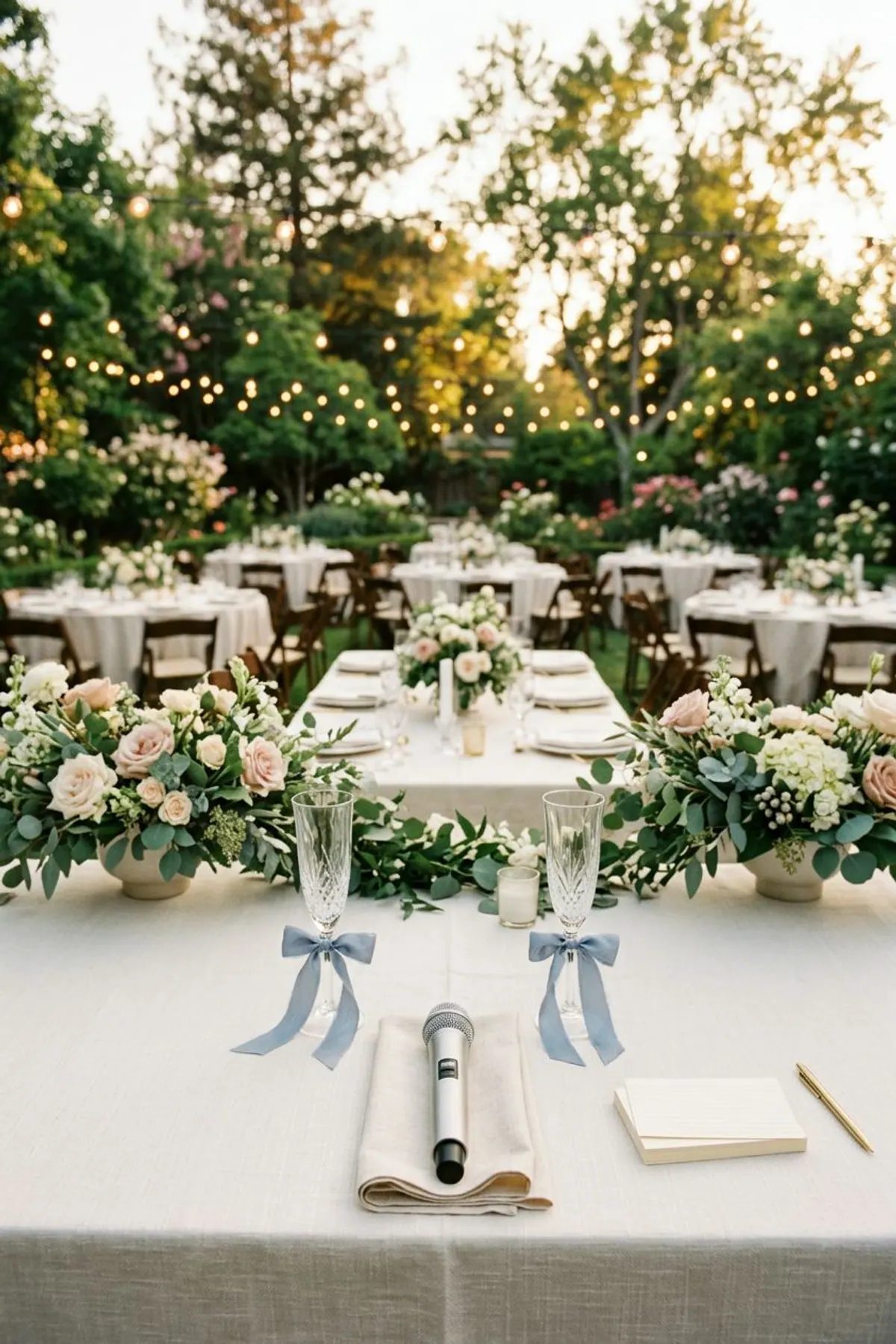
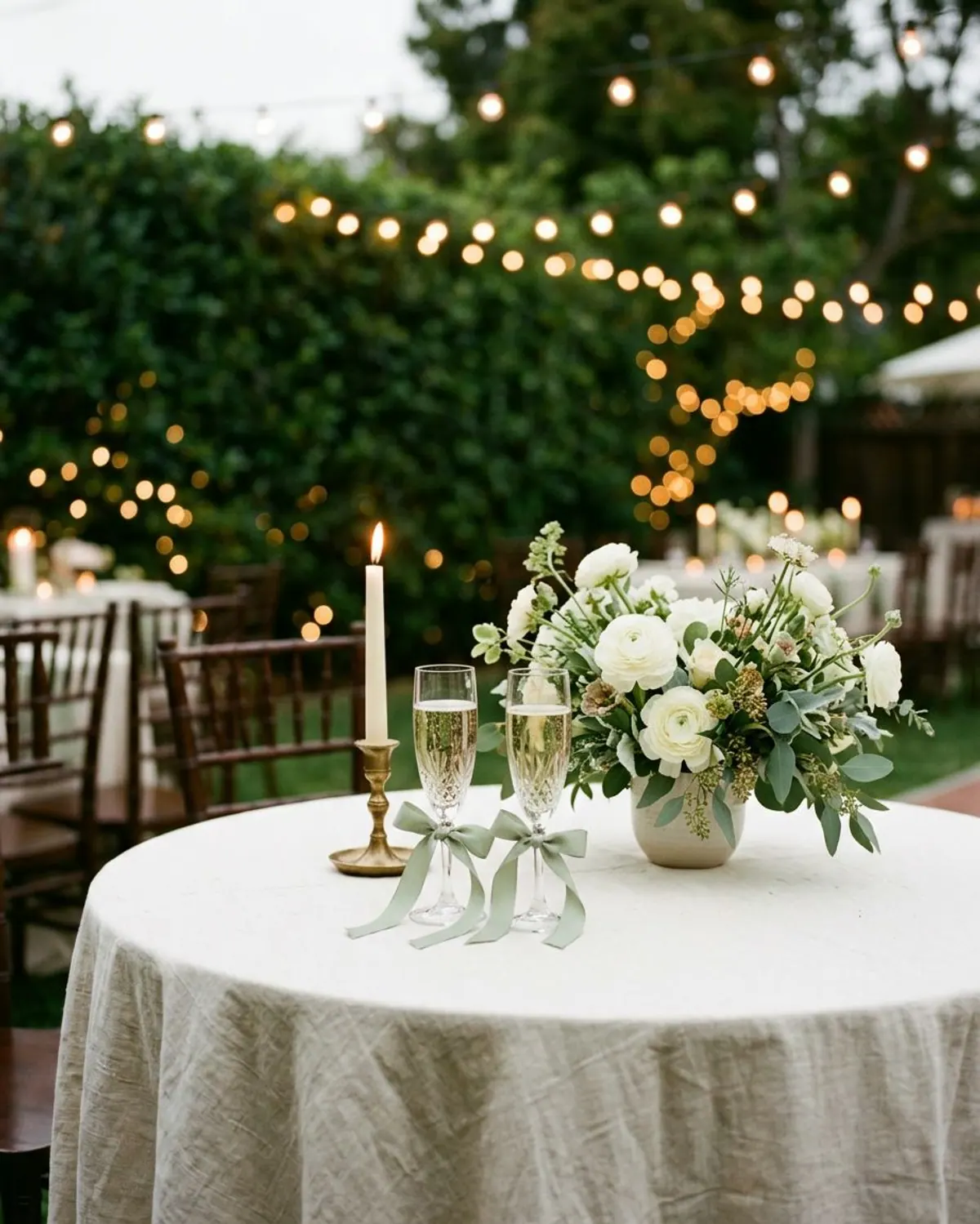
A pair for the couple and a set for the head table, so the raised glass is not a plastic cup.
Check price on Amazon for Toasting champagne flutes -
Blank index cards, 4 x 6
Typically $5 to $12
Speakers write key lines large on cards and avoid reading from a phone.
Check price on Amazon for Blank index cards, 4 x 6
A Speaker Brief You Can Copy
Send each speaker the same message at least a month out. It saves long speeches and surprise topics, and every speaker gets the same rules.
Text to send each speaker (fill in the brackets)

Common Speech Order Myths
| Myth | Reality |
|---|---|
| The father of the bride always speaks first | That is the UK order. In US receptions, the host usually opens. |
| Speeches only go after dinner | Sources differ; many couples place them once guests have food. |
| Everyone in the wedding party needs a speech | 3 to 5 speakers fills 15 to 30 minutes. Others can join a joint toast. |
| A longer speech is more heartfelt | WeddingWire recommends under five minutes, with about three as best. |
Rehearsal dinners are the better home for longer toasts, since WeddingWire notes they can run longer there with a smaller group. Move extra speakers there and keep the reception block short.
Frequently asked questions
Who speaks first at a wedding reception?
Whoever is hosting, which in most US weddings is a parent or the couple giving a short welcome. The UK tradition puts the father of the bride first and the groom second. US couples can choose either.
Do wedding speeches go before or after dinner?
Either works. Many couples place them once everyone has food, like the 6:30 pm toasts in our 4 pm sample timeline. Ask your caterer how to pause service.
How long should wedding speeches be?
Three to five minutes each. WeddingWire says to stay under five minutes, with about three as best. At 130 to 150 words a minute, 3 minutes is about 390 to 450 words.
How many speeches should a wedding have?
Three to five speakers fills 15 to 30 minutes, which is the usual range. Bridebook's Canada guide says not to pass 40 minutes in total.
Do the bride and groom give a speech?
Optional. Many couples give a 2 to 3 minute thank-you to close the block, and others visit tables instead. Either is fine.
Save it for later
Pin this to your Invitations, Vows & Speeches board so it's there when you need it.
Save to Pinterest