Safety first: Prices are examples with an as-of date. Always confirm with your own vendors. Please read our editorial guidelines before you start.
Key takeaways
- The hosts' line comes first; traditionally that is whoever is paying, but many couples now host themselves.
- "Honour of your presence" is traditional for a house of worship; "pleasure of your company" for other venues.
- Divorced parents each get their own line, with no "and" between them.
- A late parent is named in the couple's line, often as "the late [name]".
- Say "adults only" on the details card or website, never on the invitation itself.
In this post14 sections
- The 6 Lines Every Wedding Invitation Wording Needs
- Formal or Casual: Match the Wording to Your Wedding
- Both Families Hosting
- Bride's Parents Hosting (Traditional Wording)
- The Couple Hosting
- Divorced or Remarried Parents
- Honoring a Late Parent
- Same-Sex Couples
- Casual Wedding Invitation Wording
- Adults-Only Wedding Wording
- Reception Lines: Dinner to Follow and More
- Invitation Wording Mistakes to Avoid
- Next: Seating, Timeline and Vows
- FAQ
The 6 Lines Every Wedding Invitation Wording Needs
Every sample on this page uses placeholders in brackets, like [Full name], so you can swap in your own names. The order of the lines stays the same whatever your family looks like.
| Line | What goes there | Example |
|---|---|---|
| 1. Hosts | Whoever is hosting, often whoever is paying | Together with their families |
| 2. Request | The invitation itself | request the pleasure of your company |
| 3. Couple | Both names, joined by 'and' or 'to' | [Full name] and [Full name] |
| 4. Date and time | Day, date and time; formal invitations spell them out | Saturday, the twelfth of June, at four o'clock in the afternoon |
| 5. Place | Venue name, then city and state (street address goes on a details card or website) | [Venue name], [City], [State] |
| 6. Reception line | What comes after the ceremony | Dinner and dancing to follow |
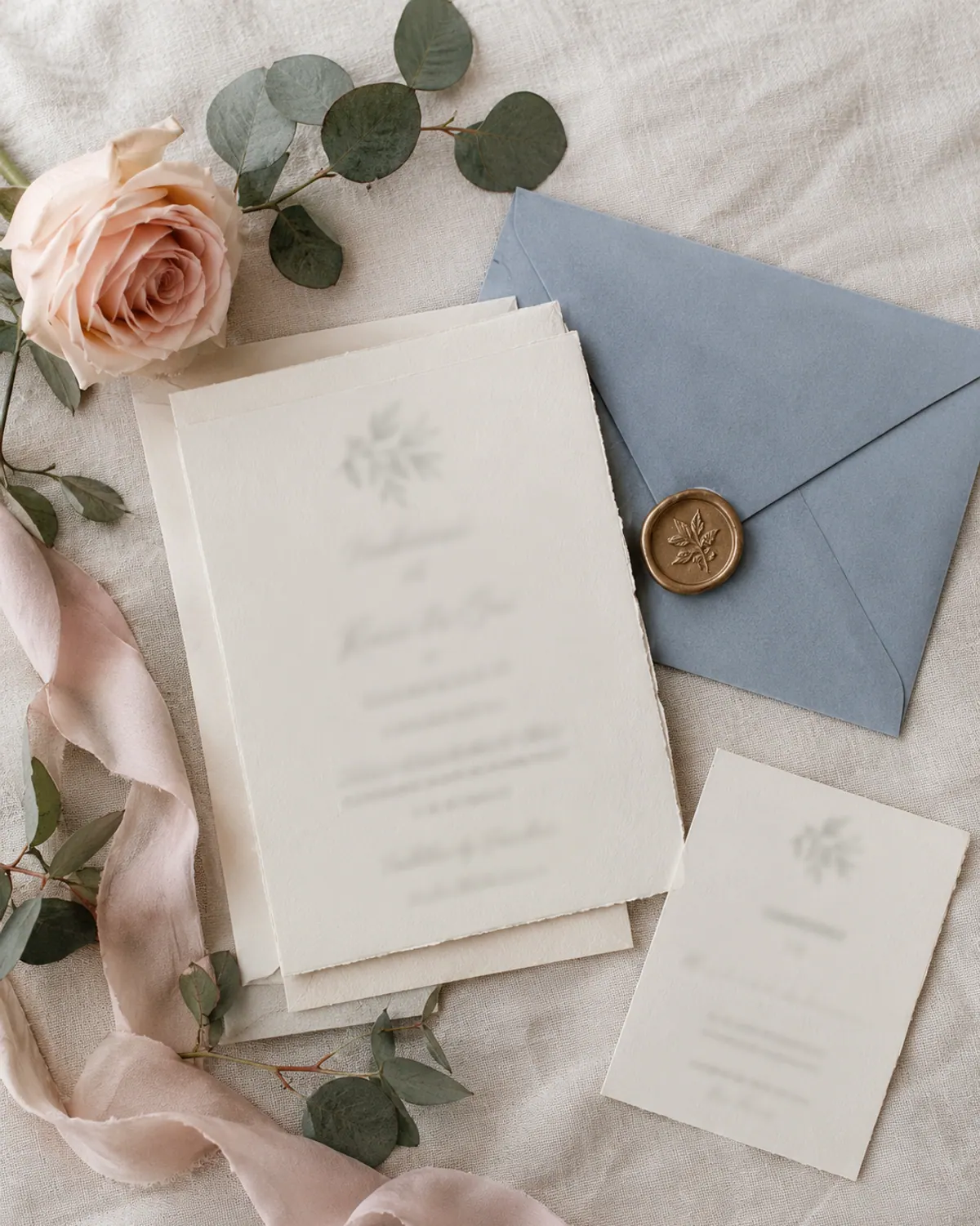
Formal or Casual: Match the Wording to Your Wedding
Your wording should sound like your wedding. A black tie evening and a backyard barbecue need different lines, even if the facts are the same.
| Detail | Formal | Casual |
|---|---|---|
| Date | Saturday, the twelfth of June | Saturday, June 12 |
| Time | at half after four o'clock | at 4:30 pm |
| Hosts | Parents named in full with titles | First names, or no hosts line |
| Request | request the honour of your presence | invite you to celebrate with them |
| Reception | Reception to follow | Food, drinks and dancing after! |
Formal invitations skip abbreviations, so Street, Saint and Doctor are written out. Numbers in the date and time are spelled out too, while house numbers can stay as numerals.
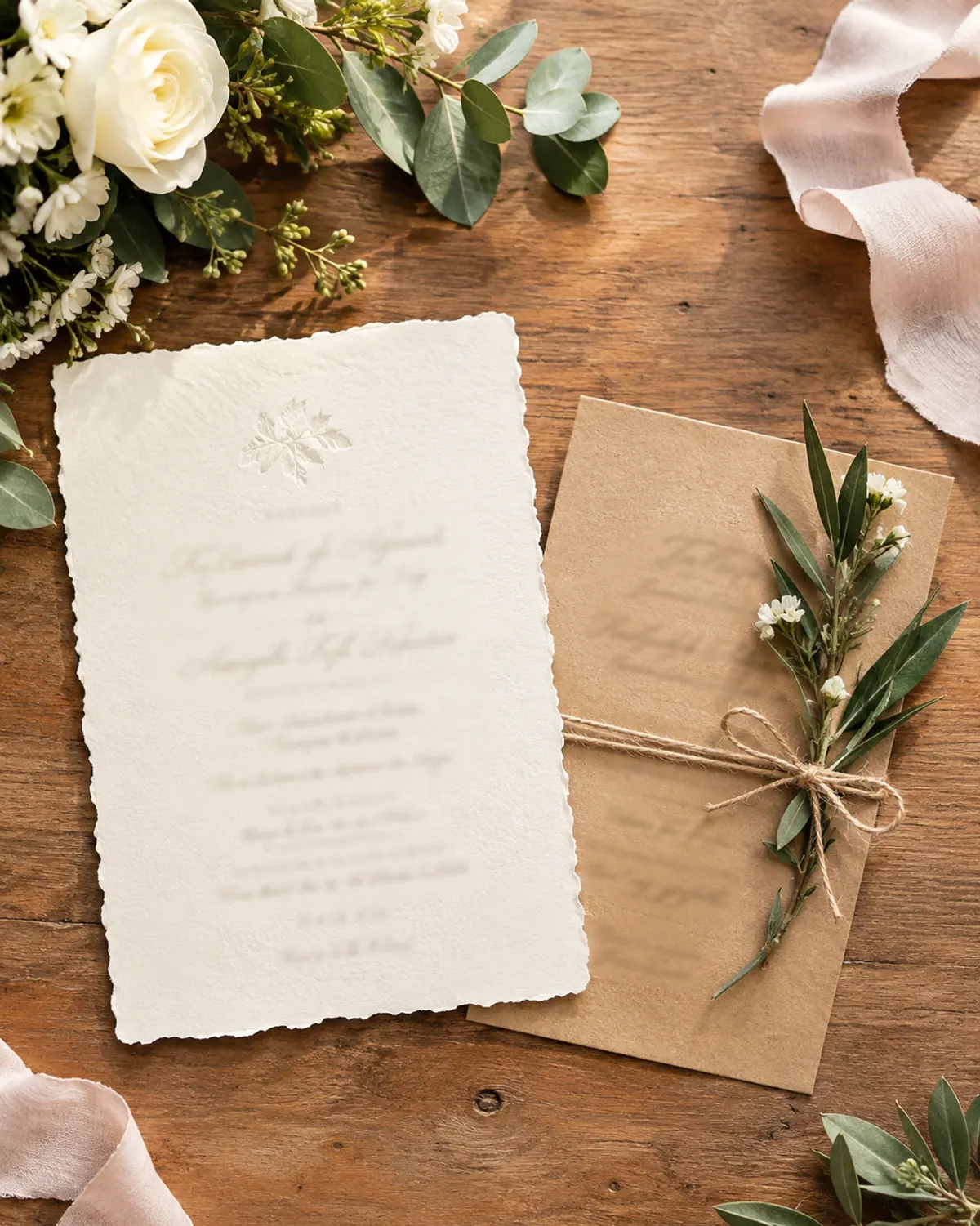
Both Families Hosting
When both families are contributing, or you just want everyone included, there are two common ways to word it. The first is short, and the second names both sets of parents.
Bride's Parents Hosting (Traditional Wording)
This is the classic version, used when the bride's parents host. The bride is listed by first and middle name only, since the hosts' line already gives the family surname.
The "son of" line is optional, and many families like it because it includes the other side. If the groom's parents are hosting instead, swap the roles: they go on the hosts line, and "their son" replaces "their daughter".

The Couple Hosting
Many couples now pay for most of the wedding themselves, so their own names lead. You can still thank family with a short opening line.
Want to include family without naming them? Open with "Together with their families" or "With joy, together with their parents", then follow the same lines.
Divorced or Remarried Parents
The rule that solves most divorced-parent wording: each household gets its own line, and there is no "and" between parents who aren't married to each other. List the parent the bride or groom lived with first, or whichever order keeps the peace.
When a stepparent is on the hosts line, write the couple's full names rather than "their daughter", since the hosts don't all share the relationship. If including everyone gets too long, "Together with their families" is a graceful fallback.
Honoring a Late Parent
A parent who has passed away can't technically host, but they can be named in the couple's line. The usual way is "the late" before their name.
Another option is the couple-hosting wording with a line such as "daughter of [Living parent] and the late [Parent's name]" under one name. Some couples choose to honor the parent in the ceremony program instead; any of these is respectful.
Same-Sex Couples
Every format above works for same-sex couples. The only real question is whose name goes first, and the answer is whatever you prefer: alphabetical, the one that sounds better aloud, or the person whose family is hosting.
If one set of parents hosts, use "at the marriage of their son" or "their daughter" with the partner's name after "and" or "to". Keep the same pattern for both names on the response card and envelopes.

Casual Wedding Invitation Wording
Casual wording drops titles and spelled-out dates and sounds more like you talking. It suits backyard, brewery and small restaurant weddings.
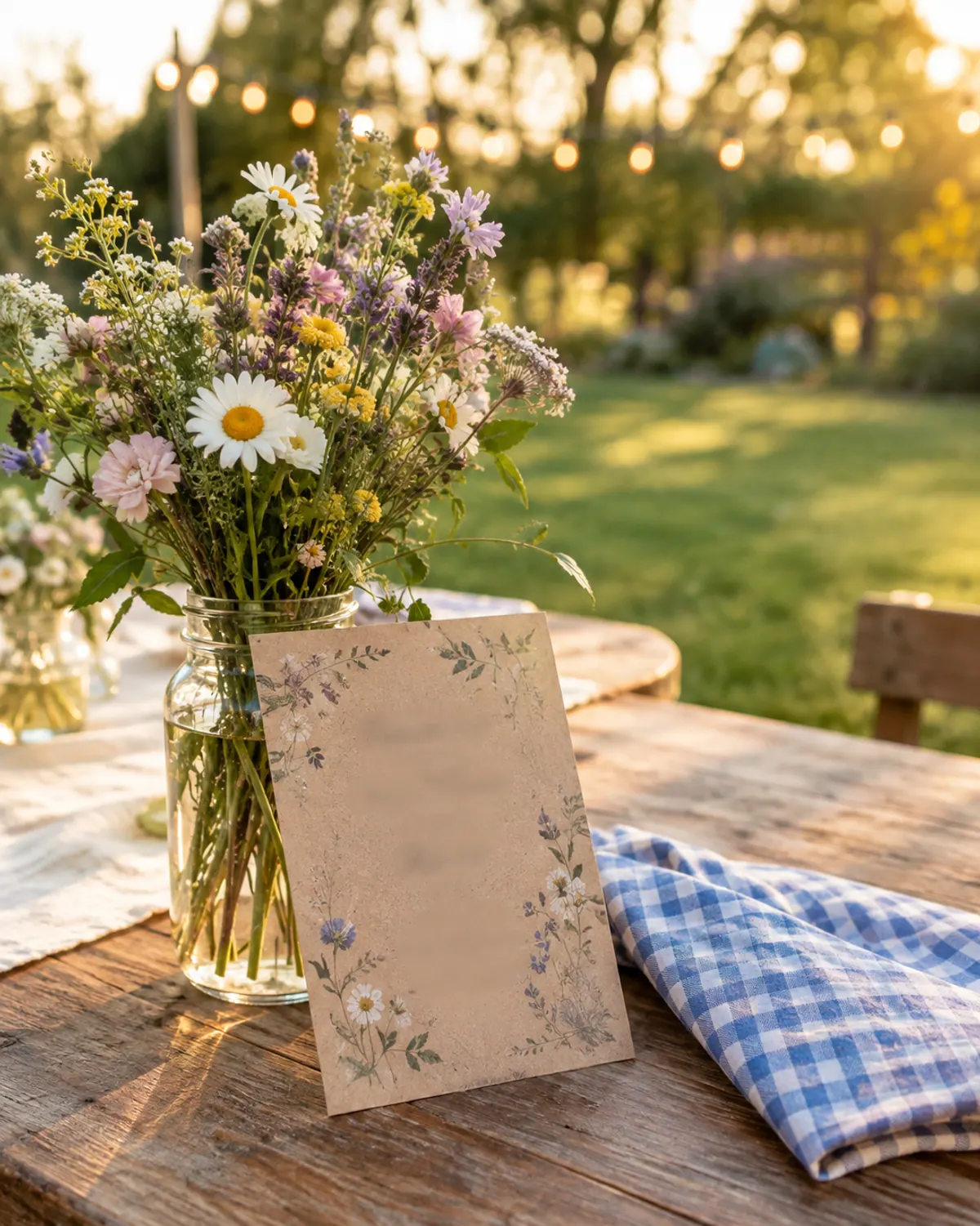
Adults-Only Wedding Wording
The invitation itself doesn't say "no kids". Instead, the envelope shows exactly who is invited, and a details card or your wedding website explains it kindly.
On the RSVP card, a line like "We have reserved __ seats in your honor" makes the headcount clear. Fill in the number before mailing, and address the envelope to the adults only.

Reception Lines: Dinner to Follow and More
The last line of the invitation tells guests what happens after the vows. If the reception is at a different place, put it on a separate reception card instead.
| Situation | Wording |
|---|---|
| Reception at the same venue | Reception to follow |
| Dinner reception | Dinner and dancing to follow |
| Reception right after, no gap | Reception immediately following |
| Cocktail-style reception | Cocktails and hors d'oeuvres to follow |
| Casual party | Food, drinks and dancing after! |
| Different location | Use a reception card with the venue and time |
A dress code line, such as "Black tie optional" or "Cocktail attire", can sit at the bottom right of the invitation. Registry details belong on your wedding website, not on the invitation.
Invitation Wording Mistakes to Avoid
Proof your invitation for these

Next: Seating, Timeline and Vows
Once RSVPs come back, the guest list turns into a seating chart; our guide to how to make a wedding seating chart covers divorced parents there too. Set the invitation time from a finished wedding day timeline so the start time on the card is the real one.
And when you're ready for the words you'll say yourself, the wedding vow template shows word counts and read-aloud times.
Printing and postage add up fast. The 12 month wedding planning checklist shows when to order and mail invitations, and the hidden wedding costs guide covers extra postage for heavy or square envelopes.
Frequently asked questions
Whose name goes first on a wedding invitation?
Traditionally the bride's name comes first. For same-sex couples or couples hosting themselves, any order works: alphabetical, whichever sounds better aloud, or the person whose family is hosting.
How do you word an invitation when the couple is paying?
Put your own names first, followed by "request the pleasure of your company at their wedding". You can open with "Together with their families" to include parents without naming them.
How do you include divorced parents on a wedding invitation?
Give each household its own line and don't join parents who aren't married to each other with "and". If a stepparent is listed, use the couple's full names instead of "their daughter".
How do you say adults only on a wedding invitation?
Don't put it on the invitation. Address the envelope only to the invited adults, fill in the reserved seats on the RSVP card, and explain kindly on a details card or your wedding website.
What does "reception to follow" mean?
It means the reception happens right after the ceremony at the same place. If it is somewhere else, include a separate reception card with the venue and time.
Save it for later
Pin this to your Invitations, Vows & Speeches board so it's there when you need it.
Save to Pinterest