This post contains affiliate links. As an Amazon Associate we earn from qualifying purchases, at no extra cost to you. Read our disclosure.
Safety first: Prices are examples with an as-of date. Always confirm with your own vendors. Please read our editorial guidelines before you start.
Key takeaways
- Start after your RSVP deadline and aim to finish about a week before the wedding.
- A 60-inch round seats 8 comfortably and a 72-inch round seats 10; divide and round up.
- Seat the couple, parents and tricky family situations first, then fill the easy tables.
- Every guest should know at least two people at their table; skip the singles table.
- Alphabetical signs are faster for big weddings; by-table signs suit small ones.
In this post8 sections
What You Need Before You Start
A seating chart goes fastest when every input is ready before you move a single name. Gather these first, and the seven steps below take one or two evenings instead of two weeks.
Gather before you start
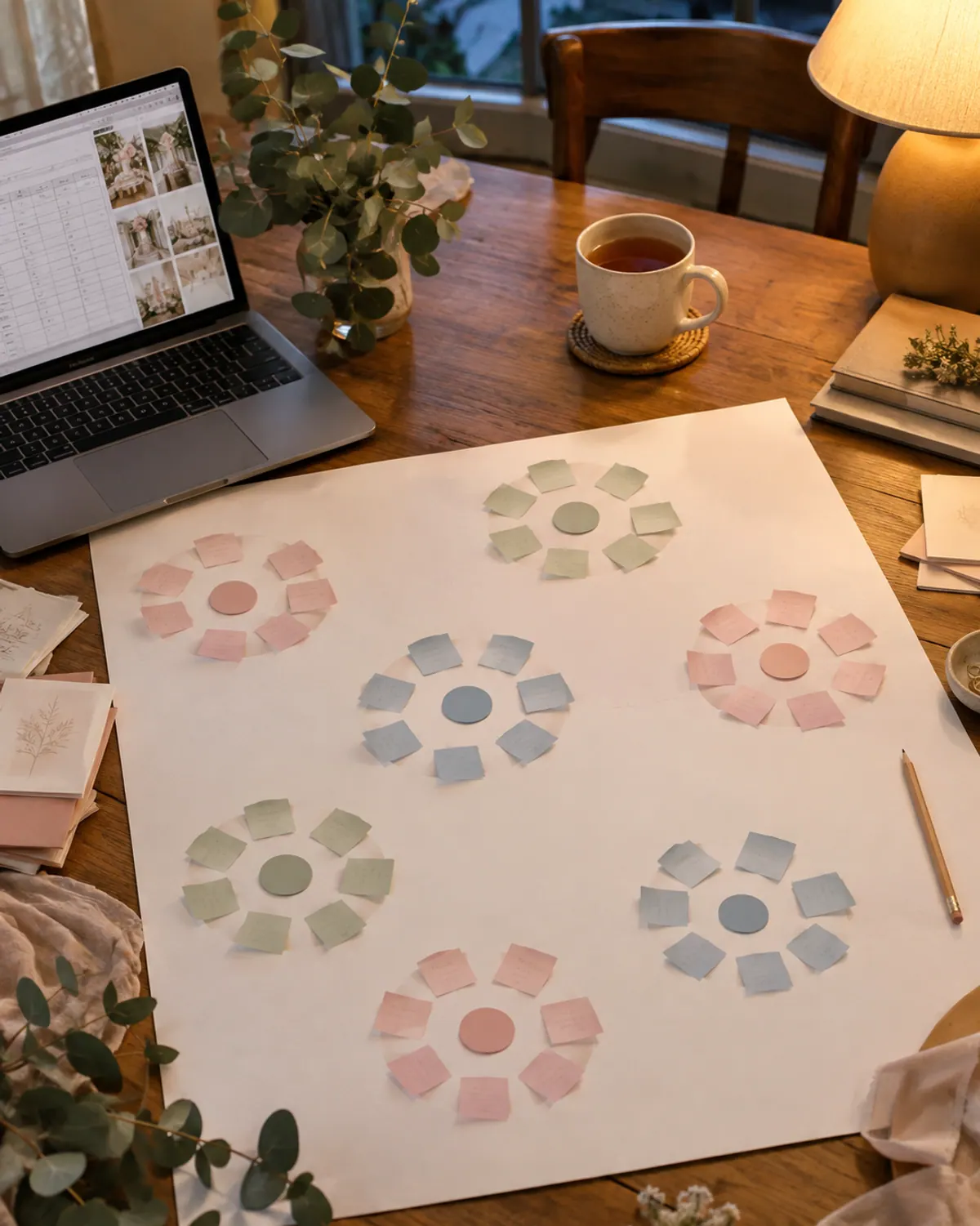
Most couples start the chart once the RSVP deadline passes, often 3 to 4 weeks before the wedding. Then the chart can be final about a week before, which leaves time to print signs and cards.
Wedding Seating Chart Table Math
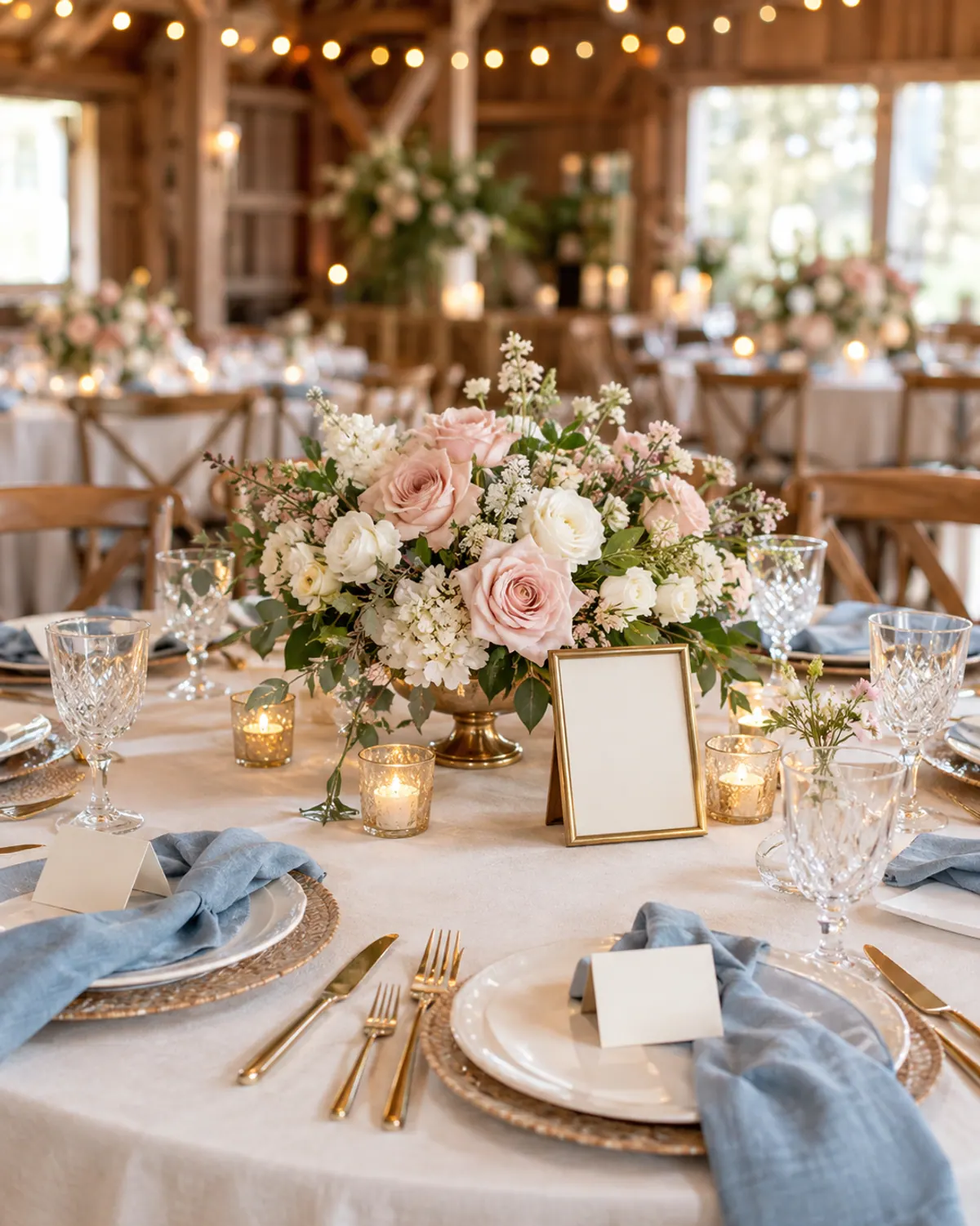
Before you seat anyone, work out how many tables you need. Rental companies list a common seat count and a squeezed one for each table size, and the squeezed number means elbows touching.
| Table | Seats comfortably | Seats max | Good for |
|---|---|---|---|
| 60-inch round | 8 | 10 | Most guest tables |
| 72-inch round | 10 | 12 | Bigger groups, fewer tables |
| 8-foot banquet (rectangle) | 8 (4 per side) | 10 with ends | Long family-style rows |
| Sweetheart table | 2 | 2 | Just the couple |
| Head table (banquet) | 8 to 10 on one side | Depends on length | Couple plus wedding party |
Worked example: 120 guests with a sweetheart table leaves 118 guests. At 8 per 60-inch round that is 118 divided by 8, or 14.75, so you round up to 15 tables. At 10 per 72-inch round it is 11.8, so 12 tables.
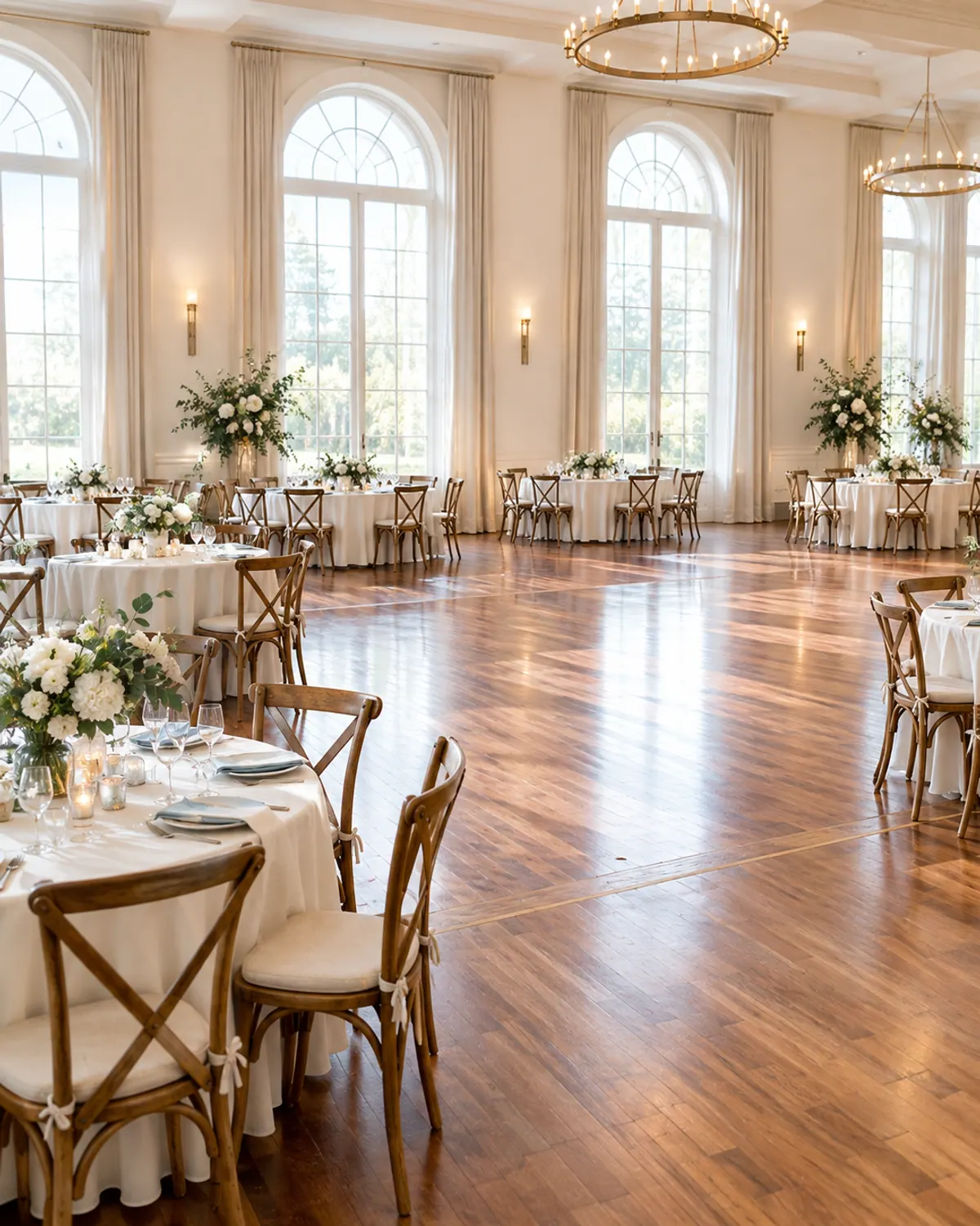
Each 60-inch round with chairs needs roughly a 10 to 12 foot circle of floor, so ask the venue how many fit next to the dance floor. Add one or two spare chairs for a surprise guest or a high chair.
How to Make a Wedding Seating Chart in 7 Steps
-
Step 1: Lock the guest list and meal choices
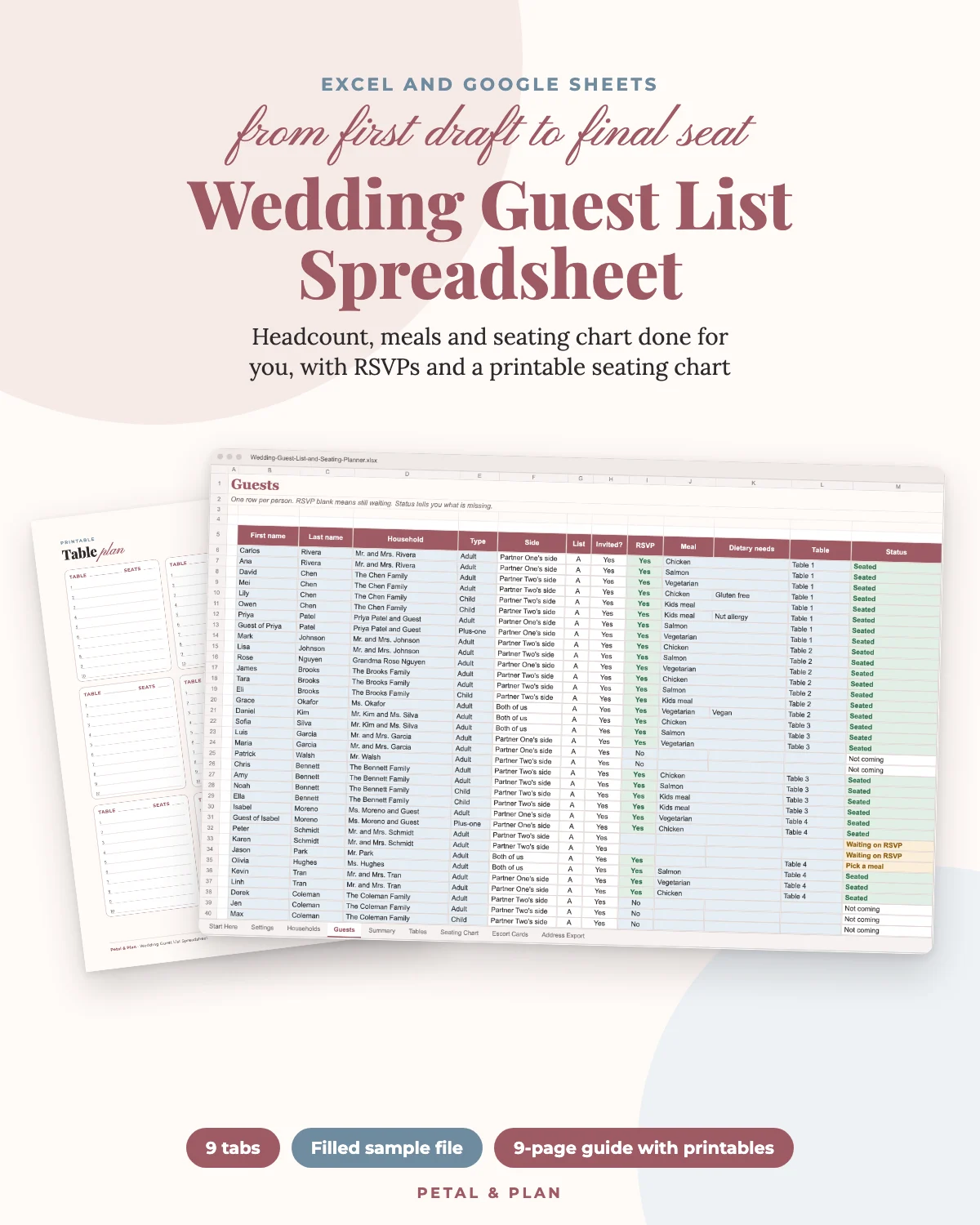
Wait until the RSVP deadline passes, then chase the last replies by phone. Put every confirmed guest on one list with their meal choice, any dietary needs and whether they need an accessible seat.
-
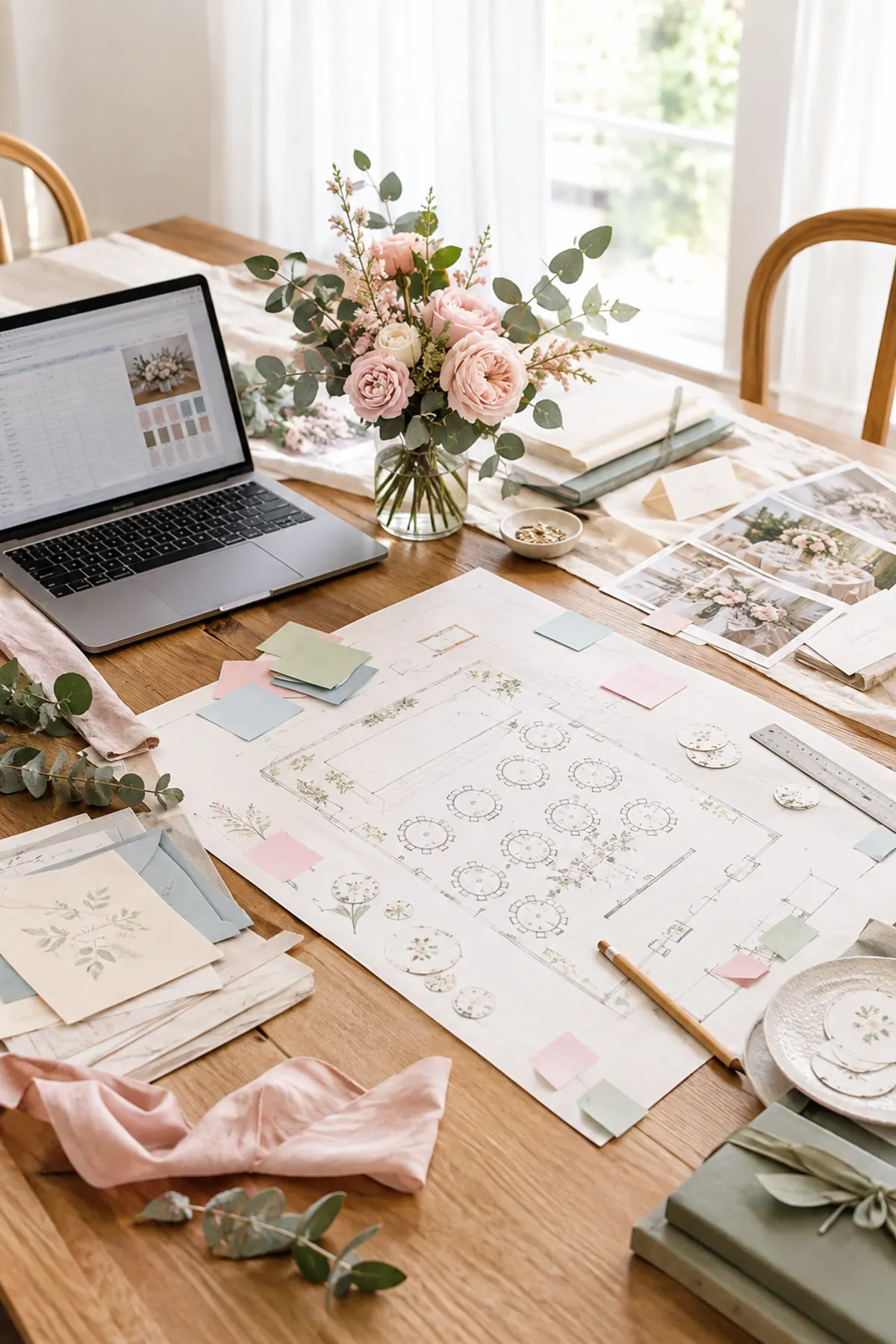
Step 2: Draw the floor plan
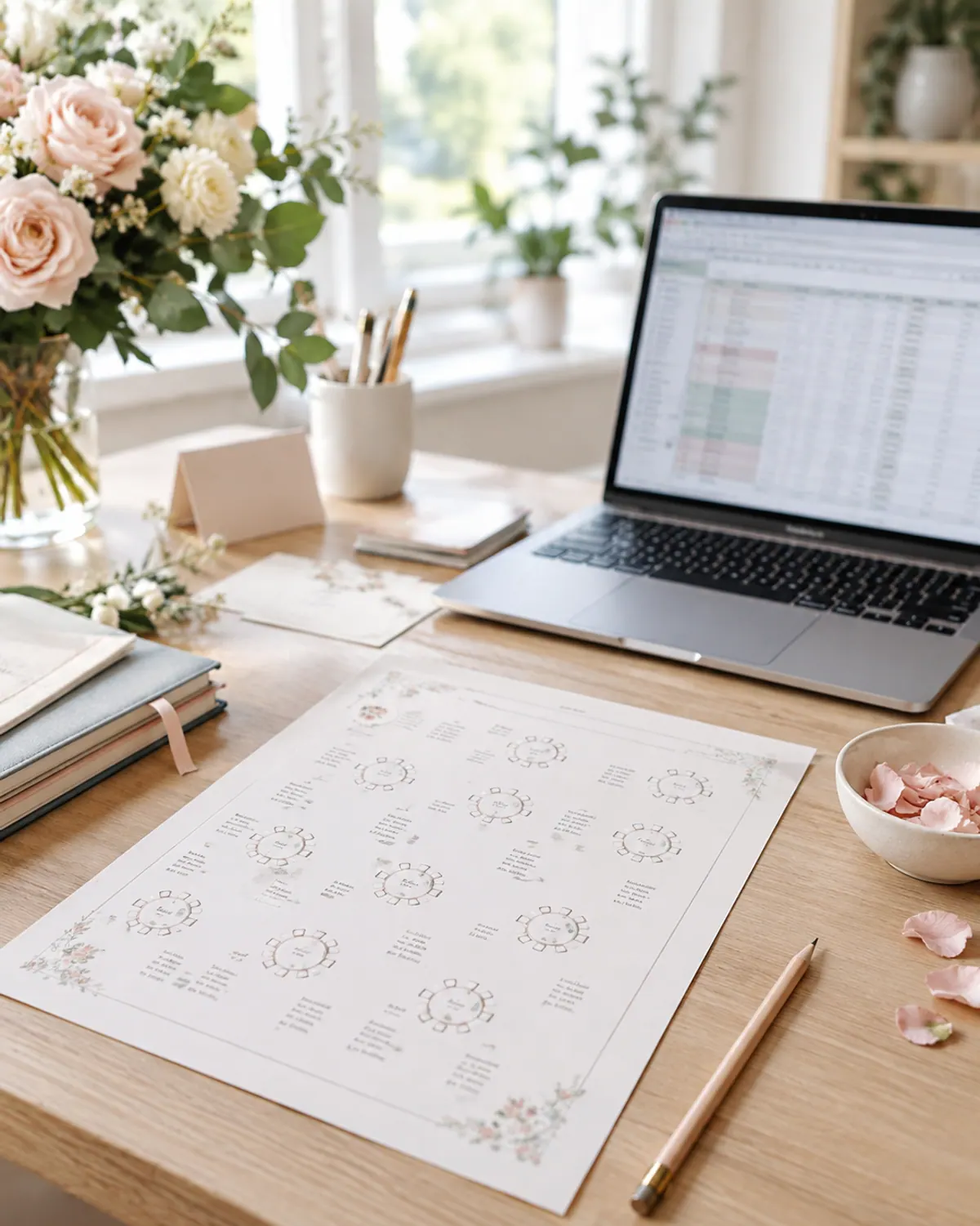
Get the floor plan from your venue and mark the dance floor, DJ or band, bar, exits and restrooms. Number the tables now, starting with the ones closest to the couple's table.
-
Step 3: Group guests into circles
Write each guest on a sticky note or spreadsheet row, then cluster them: family on each side, college friends, work friends, neighbors, and so on. Couples and plus-ones always stay together, even if you've never met the plus-one.
-
Step 4: Place the couple and the VIP tables first
Decide between a sweetheart table and a head table, then seat parents and grandparents at the tables nearest you. These are the seats people notice, so settle them before anything else.
-
Step 5: Handle the tricky seats next
Divorced parents, feuding relatives, exes and kids all get placed before the easy tables. The rules for each are in the next section, and it helps to solve these while you still have every table open.
-
Step 6: Fill the rest, table by table
Seat each friend group together and top up short tables with people who share something, like age or hometown. A good check: every guest should know at least two other people at their table.
-
Step 7: Check it, then choose how to display it
Read the chart out loud to one family member from each side; they will spot problems you can't. Then pick a seating sign, escort cards or both, and send your caterer the table-by-table meal counts.

Seating Rules for Tricky Family Situations
These are the seats that cause real stress. There is no single correct answer for any of them, so the goal is that nobody feels pushed aside on the day.
Divorced parents:
At the ceremony, traditional etiquette (Emily Post) puts the parent who raised you in the front row and the other parent a row or two behind, each with their partner. Many couples now give each parent a front-row seat on opposite ends instead. At the reception, seat them together only if they truly get along; otherwise give each parent their own table, both equally close to yours.
Feuding relatives:
Put them at different tables on opposite sides of the room, and not in each other's line of sight to the dance floor. Tell a calm family member where each one is sitting, just in case.
A late parent or grandparent:
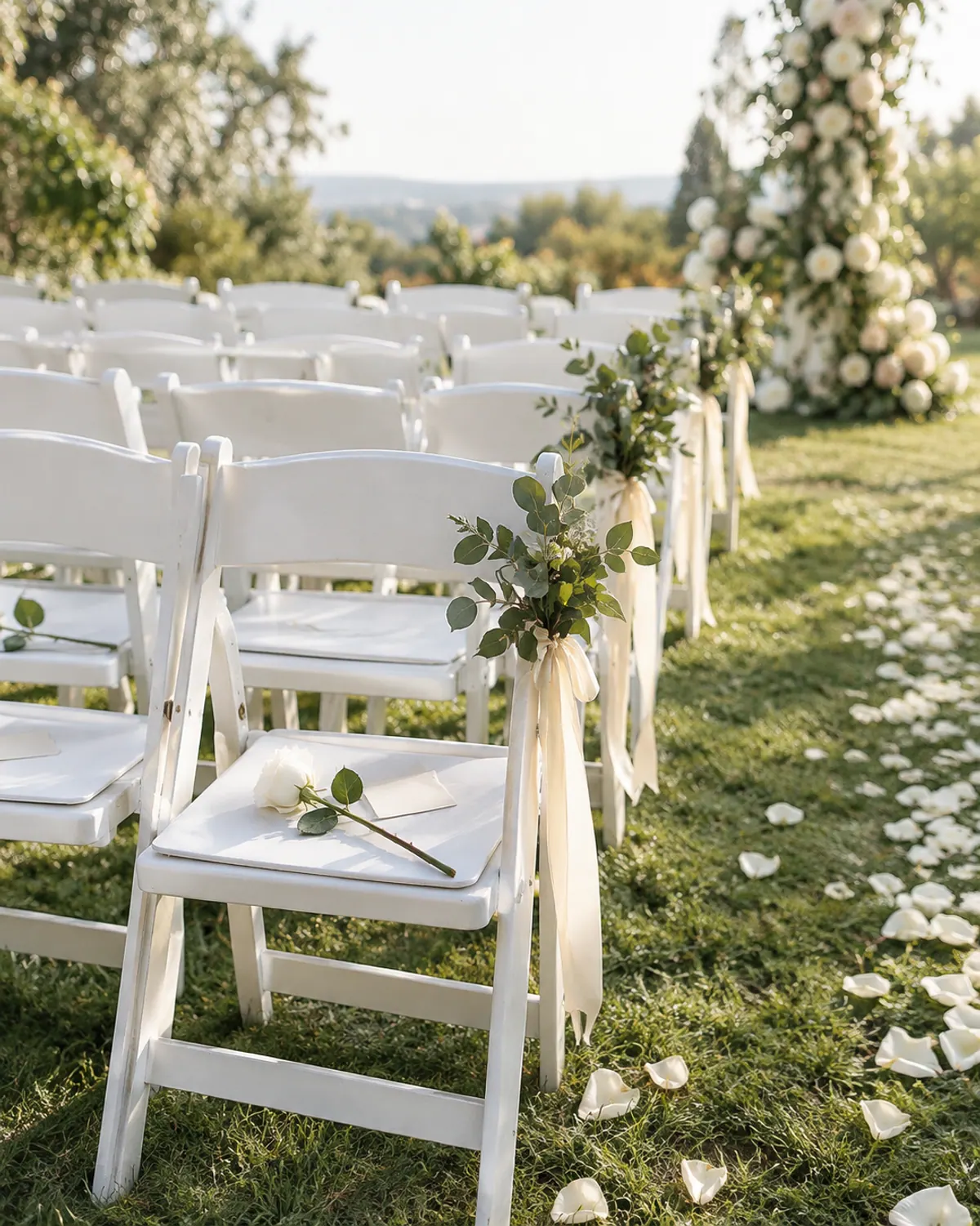
Some couples reserve a seat at the ceremony with a flower or a small sign. It is optional, and it is fine to talk it over with your family first.
Exes and new partners:
Seat them at tables that don't face each other. If both are close friends, choose tables with their own friend groups so each one has people to talk to.
Singles:
Skip the singles table. Seat single guests with friends they already know, which is far kinder than a table that announces who came alone.
Kids:
Young children sit with their parents. A kids' table works for school-age kids if it sits near their parents and has an adult checking in.
Older guests and anyone with mobility needs:
Seat them away from the speakers, close to restrooms and with an easy path to the exit. Ask in advance whether anyone uses a wheelchair, so a table spot is left open.
Wedding Seating Chart Display Ideas and Print Sizes
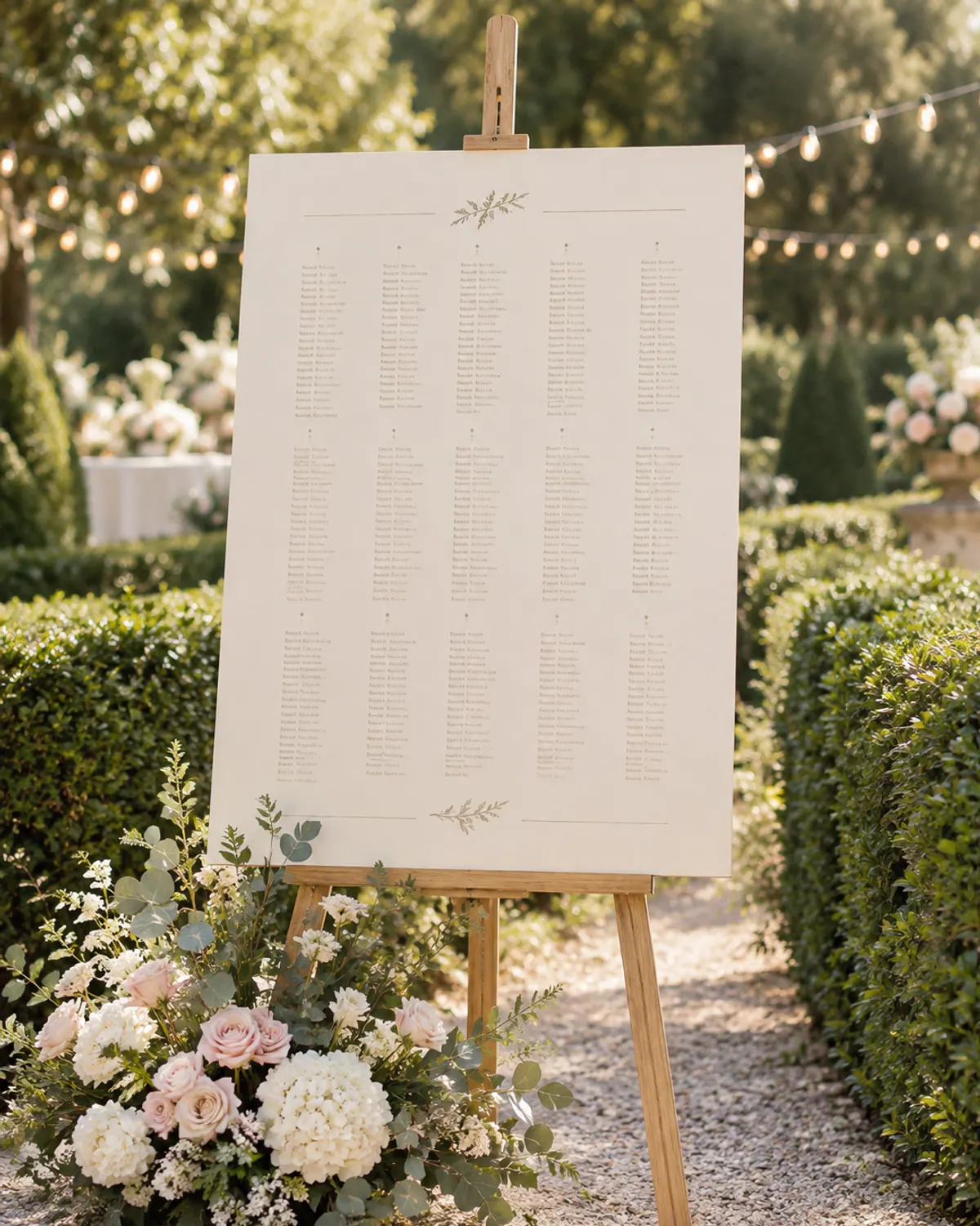
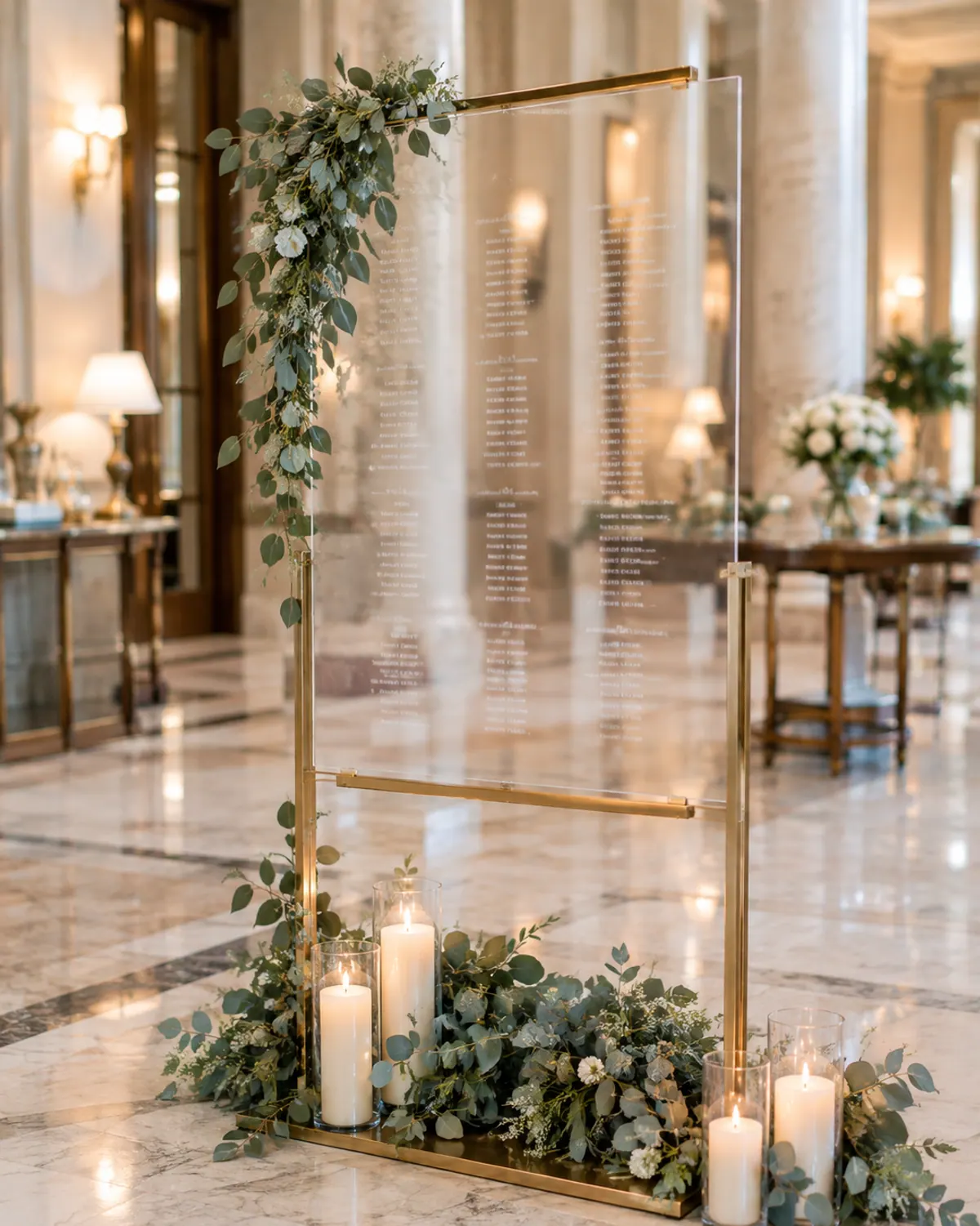
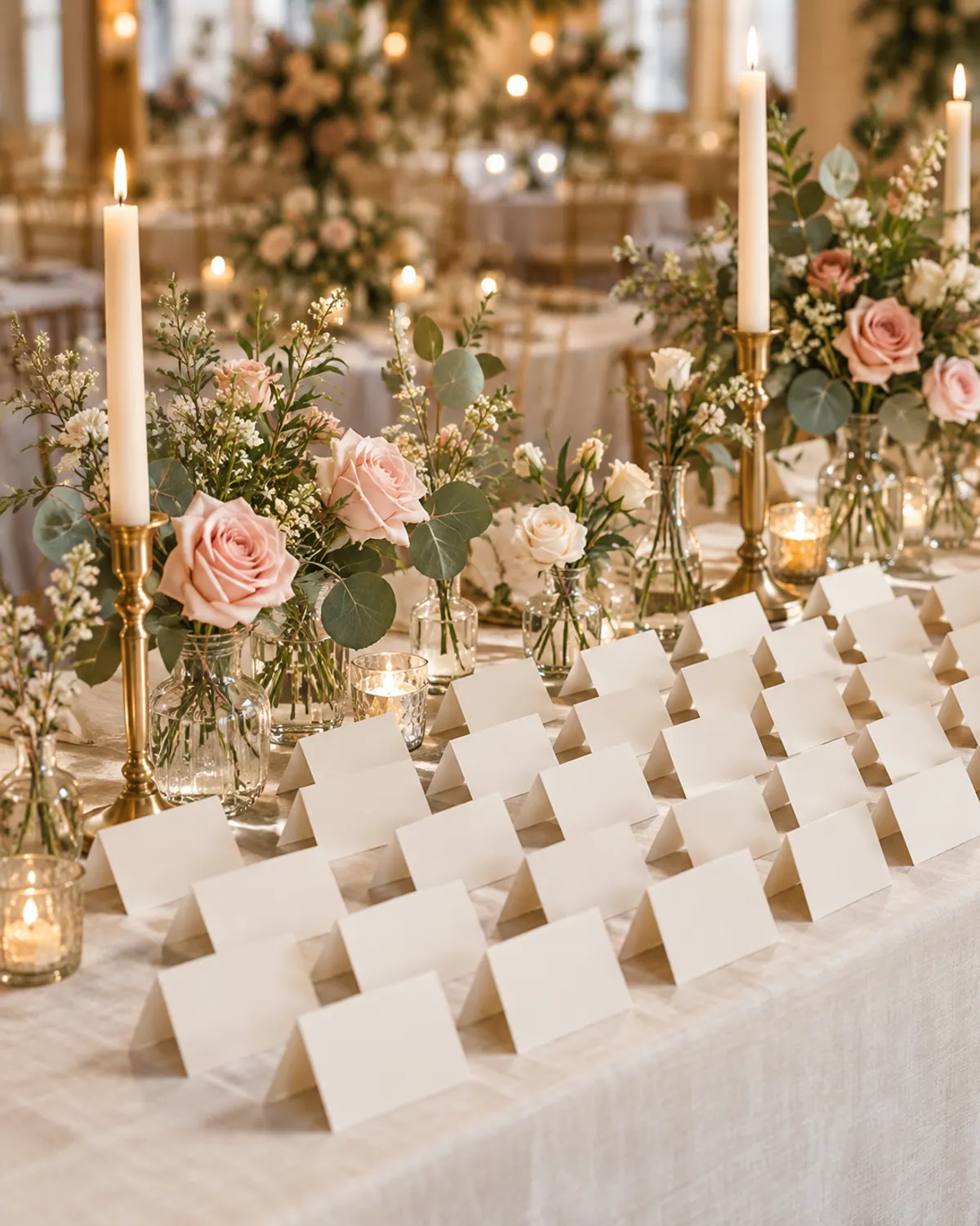
Guests find their table in one of two ways: a large seating chart sign, or escort cards they pick up. A sign is usually cheaper, while escort cards double as a favor or a meal indicator.
What we like
- Alphabetical sign: guests find their name fast, best for larger weddings
- By-table sign: shows who sits together, easy for small guest lists
- Escort cards: can carry a meal symbol for the servers
Keep in mind
- Alphabetical sign: harder to change late, since every name shifts
- By-table sign: slow to scan with more than about 100 guests
- Escort cards: more printing, cutting and table space
| Item | Common sizes | Notes |
|---|---|---|
| Seating chart sign | 18x24 or 24x36 inches | 24x36 for longer guest lists so names stay readable |
| Escort cards | About 3.5x2 inches flat, or tented | One per guest or couple, with the table number |
| Place cards | About 3.5x2 inches tented | Only if you assign seats |
| Table numbers | 4x6 or 5x7 inches | Fit a standard frame or stand |
Print a test page first and read it from six feet away. If you can't read a name easily, guests can't either, so split the chart into two signs or switch to escort cards.
Helpful, not required
-
Blank acrylic sign with stand
about $20 to $45
A seating chart you can letter yourself or send to a print shop for vinyl.
Check price on Amazon for Blank acrylic sign with stand -
Floor easel for wedding signs
about $20 to $40
Holds an 18x24 or 24x36 board at eye level.
Check price on Amazon for Floor easel for wedding signs -
Blank tent place cards
about $8 to $15
Printable escort or place cards in standard sizes.
Check price on Amazon for Blank tent place cards -
Table number holders
about $15 to $30
Fit 4x6 or 5x7 cards.
Check price on Amazon for Table number holders
Common Seating Chart Mistakes
Check your chart for these
Finish the Seating Chart, Then the Rest of the Day
With the chart done, send the table list to your venue and caterer and print the signs. Next, lock your wedding day timeline so everyone knows when dinner is served.
Still working on the words? Our guide to wedding invitation wording for every family situation covers divorced and remarried parents too, and the wedding vow template helps with the part you'll say out loud.
Table count drives rental and catering costs, so run your final number through the wedding budget calculator before you sign the rental order.
Frequently asked questions
When should you make a wedding seating chart?
Start once your RSVP deadline passes, often 3 to 4 weeks before the wedding, and aim to finish about a week before. That leaves time to print signs and send meal counts to your caterer.
How many people fit at a wedding table?
A 60-inch round seats 8 comfortably and up to 10. A 72-inch round seats 10 comfortably and up to 12. An 8-foot banquet table seats 8, or 10 with the ends.
Should a wedding seating chart be alphabetical or by table?
Alphabetical is faster for guests at larger weddings, roughly 100 guests or more. By table works well for smaller weddings and shows who is sitting together.
Where do divorced parents sit at a wedding?
Traditional etiquette puts the parent who raised you in the front row and the other a row or two back. Many couples give each parent a front-row seat on opposite ends, and separate reception tables equally close to the couple.
Do I need escort cards and place cards?
Escort cards or a seating sign tell guests their table. Place cards are only needed if you assign individual seats, which is most useful for a formal plated dinner.
Save it for later
Pin this to your Guest List & Seating board so it's there when you need it.
Save to Pinterest