Safety first: Prices are examples with an as-of date. Always confirm with your own vendors. Please read our editorial guidelines before you start.
Key takeaways
- Enjoy the engagement for a few weeks before you book anything.
- Have the money talk first: a total you can pay without new debt, and who is helping.
- Pick your top 3 priorities together. They tell you where to spend and where to save.
- A rough guest count comes before the venue, because it decides which venues fit.
- The venue and date come first among bookings. The photographer often comes right after.
In this post7 sections
Why the Order of Wedding Planning Steps Matters
Most early mistakes come from booking in the wrong order. A couple falls for a venue, pays the deposit, and only then finds out it holds 200 when they wanted 80.
The steps below run from the choices that shape everything to the ones that can wait. If you only do the first five this month, you're in good shape.

The First 10 Steps After Getting Engaged
-
Step 1: Celebrate, then tell the people closest to you
Call parents, grandparents and close friends before you post online. Then give yourselves a few weeks off from planning.
Nothing in the first month has to be booked. If you plan to post the news, agree on when, so nobody hears it from social media first.
-
Step 2: Have the money talk
Agree on a total you can pay without new debt. Ask family, kindly and early, whether they plan to help and how much. Write down the number, and hold back 5 to 10 percent as a buffer.
A simple way to start: add what you've saved, what you can put aside each month until the date, and any family help. That sum is your real total.
-
Step 3: Pick your top 3 priorities
Each of you writes down the three things you care about most, such as food, photos, music or the guest count. Compare lists. Where they match, spend more; where neither of you cares, save.
-
Step 4: Draft a rough guest count
List names quickly, without addresses. Count people, not invitations. A rough number, even a range like 70 to 90, is enough to start pricing venues.
Write two numbers: the must-invite list and the would-be-nice list. The gap between them is where most of the hard choices will be.
-
Step 5: Choose a season and 2 or 3 dates
Pick a season first, then a few possible dates. Fridays, Sundays and off-season months often cost less at many venues. Check for big family events and holidays before you get attached to one date.
-
Step 6: Decide on the size and style
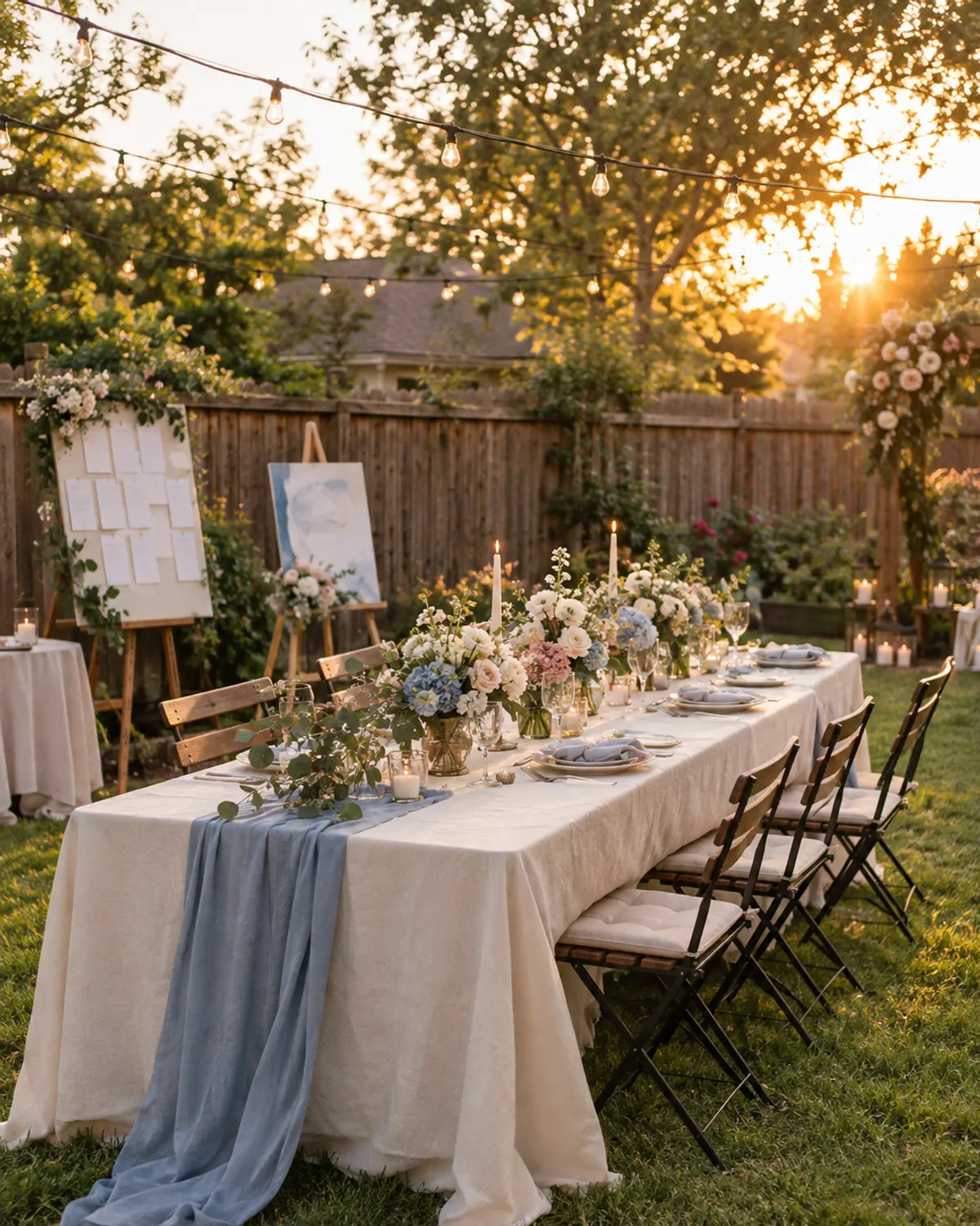
Small backyard, community hall, restaurant or a full venue? Say it out loud together.
The style shapes the venue list, and a simple style can save thousands. If a big wedding isn't the plan, a courthouse ceremony with a dinner after, or a small brunch reception, are both real options.
-
Step 7: Set up one shared folder and email
Make one shared email for vendors and one shared folder for quotes and contracts. Start a simple sheet for vendors, deposits and due dates. It saves you from hunting through two inboxes later.
-
Step 8: Look into insuring the ring
Many couples add the engagement ring to renters or homeowners insurance, or buy a separate policy. Ask your insurer what is covered and keep the receipt or appraisal in your shared folder.
-
Step 9: Tour venues and book the date
Tour about three venues that fit your count and style. Ask what the price includes, the guest cap, the end time and any required vendors.
Read the contract for service charges and tax before you sign. Ask what the room looks like with your guest count, where photos happen if it rains, and whether you can bring your own caterer.
-
Step 10: Book the photographer
Good photographers book up early, so many couples book theirs right after the venue. Compare how many hours each package covers, not just the price.






What a Budget Split Looks Like
Step 2 is easier with real numbers in front of you. The Knot 2026 Real Weddings Study put the average US wedding at $34,200 for 117 guests. Couples in the $15,001 to $40,000 budget band averaged $26,400.
You don't need to spend anything close to that. Type your own total and guest count into the calculator below to see a starting split.
Free calculator
Split your wedding budget
Enter your total and guest count. The split updates as you type. Nothing you enter leaves this page.
Budget per guest $0
| Category | Share | Amount |
|---|---|---|
| Venue | ||
| Catering and bar | ||
| Photography | ||
| Videography | ||
| Attire and beauty | ||
| Flowers and decor | ||
| Music or DJ | ||
| Officiant and license | ||
| Stationery and postage | ||
| Cake and desserts | ||
| Wedding rings | ||
| Transportation | ||
| Favors and gifts | ||
| Tips and vendor meals | ||
| Buffer for surprises | ||
| Total | 100% |
These shares are starting points, not quotes. Prices swing a lot by city, season and day of the week, so get written quotes and move money between rows to match what matters most to you. Keep the buffer untouched until the last month.
For a full walk-through, see our guide on how to plan a wedding on a budget, or our $10k wedding budget plan if your total is smaller.
Questions to Ask on Your First Venue Tour
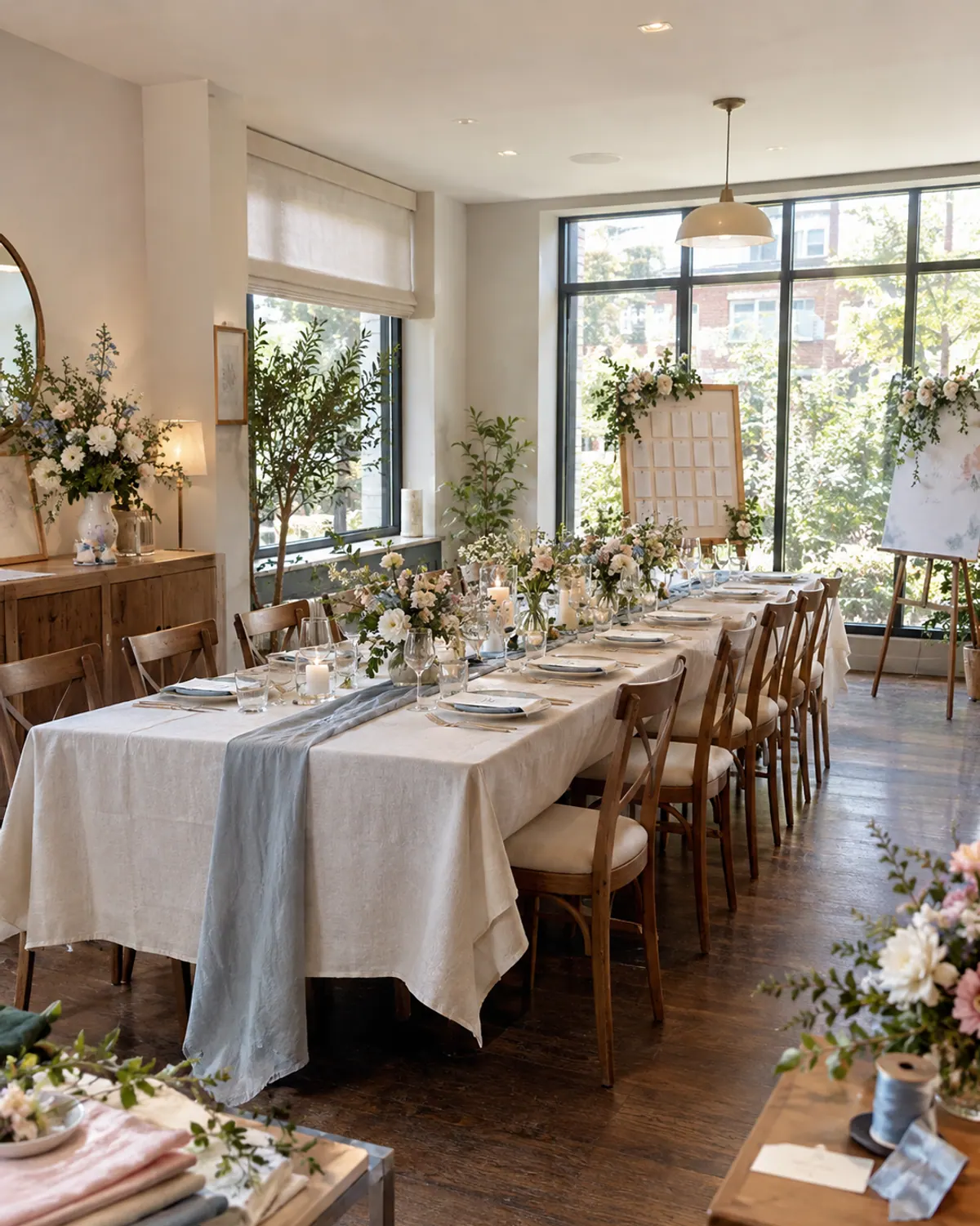
Step 9 is the first big booking, so go in with a list. Bring a notebook and ask every venue the same questions, so the quotes are easy to compare.
Venue tour questions
Write the answers down before you leave. A week later, the venues blur together, and the notes are what you'll compare.
What Can Wait
Engagement excitement makes everything feel urgent. These can wait until the budget, guest count and venue are set.
What we like
- Talk about money before you tour venues
- Agree on a rough guest count before you price anything
- Get every quote in writing, with tax and fees
- Keep every contract in one shared folder
Keep in mind
- Buying the dress before you know the budget
- Asking the wedding party in the first week
- Sending save the dates before the guest list is final
- Paying a deposit on the first venue you see
After the First 10 Steps
With the venue and photographer booked, the rest follows a calendar. Our 12 month wedding planning checklist lays it out month by month. If you'd rather see every task by category, try our wedding planning checklist printable.

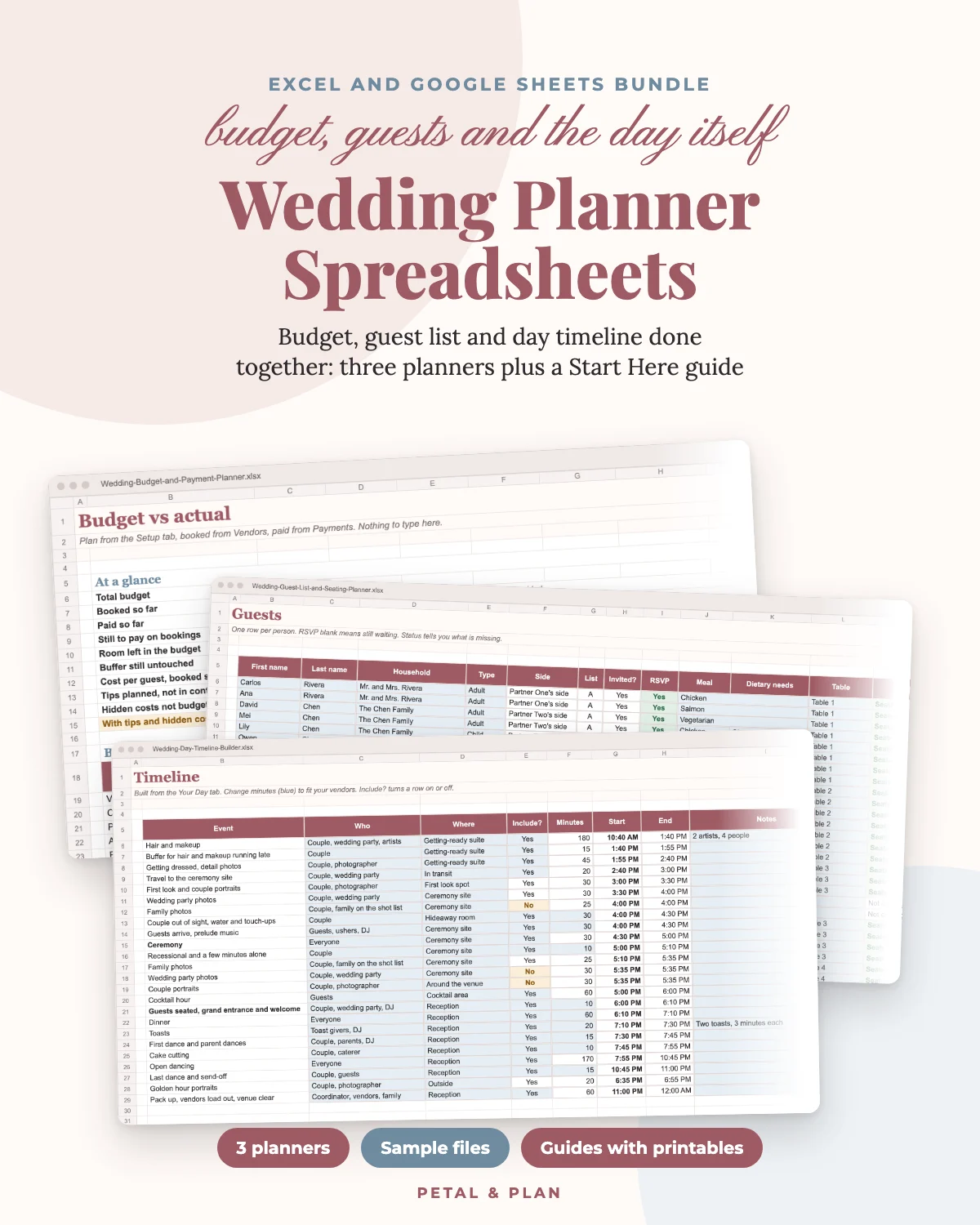
Deposits start the moment you book. The Wedding Budget & Payment Planner is a $19 spreadsheet that splits your total across 14 categories, tracks each vendor's deposits and due dates, and shows month by month how much leaves your account. Code PETAL20 takes 20 percent off. It also comes in the Wedding Planning Core Trio with the guest list and day timeline planners: $33 for all three instead of $55 bought separately.
Before the first deposit, watch for the fees that don't show up in quotes. Our list of hidden wedding costs shows where they hide.
Frequently asked questions
What should you do first after getting engaged?
Celebrate and tell close family first. Then have the money talk: agree on a total you can pay without new debt and ask whether family plans to help.
How soon after getting engaged should you start planning?
Many couples take a few weeks to enjoy it, then start with the budget and guest count. For a 12-month engagement, booking the venue around 10 to 11 months out is a common pace.
What do you book first for a wedding?
The venue and date, because most other vendors need a date and a location. The photographer is often booked right after.
Should you set a budget before picking a venue?
Yes. The venue is usually one of the biggest costs, so knowing your total and guest count first keeps you from touring places you can't afford.
Do you need a wedding planner to get started?
No. A shared folder, a simple budget sheet and a checklist cover the first steps. Some couples add a day-of coordinator later for the wedding day itself.

Save it for later
Pin this to your Planning Checklists board so it's there when you need it.
Save to Pinterest